

Palvi Tanneja
Founder:The Parenting Compass/ Parenting Coach/DMIT Practitioner
Building stronger families through shared responsibility, mutual respect and teamwork
Navigating Through Parenthood Parenting is one of life’s most meaningful journeys, but it can also be one of its most demanding responsibilities. From managing school schedules and homework to handling emotional outbursts, screen-time struggles and everyday routines, raising children requires patience, time and consistent effort.
Traditionally, parenting responsibilities have often been divided along gender lines. Fathers were expected to provide financially, while mothers were expected to manage children’s daily needs and emotional well-being. Although many families continue to follow these patterns, modern parenting is gradually moving towards a more collaborative approach.
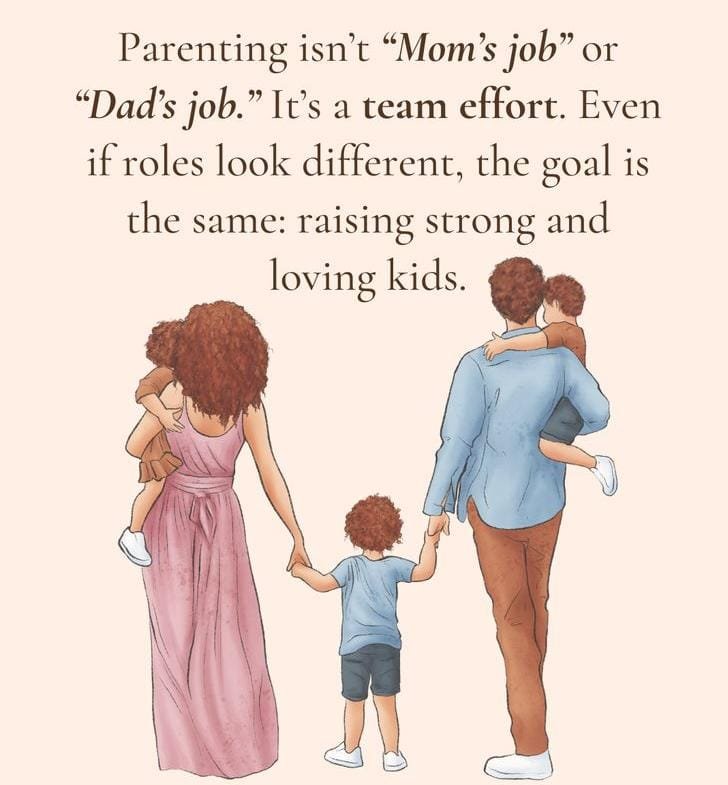
Today, parenting is not simply about dividing tasks between two adults. It is about working together to create an environment in which children feel supported, understood and secure. Modern parenting is not one parent carrying the responsibility while the other helps occasionally. It is two parents sharing the journey, the decisions and the challenges of raising a child.

1. Parenting Is a Shared Responsibility, Not One Parent’s Job In many households, even when both parents work, mothers often carry a significant portion of the invisible work of parenting. They may remember vaccination appointments, school deadlines, homework submissions, parent-teacher meetings, birthdays and changing emotional needs. This mental load can be exhausting because it involves not only completing tasks but also constantly remembering, planning and anticipating what needs to happen next. Meanwhile, fathers may contribute through financial provision, household responsibilities or occasional care giving, yet the overall responsibility for organising family life may remain uneven. Modern parenting requires us to rethink this arrangement. Shared parenting means that both parents take ownership of their children’s needs. It involves noticing what needs to be done, planning ahead and following through without waiting for instructions. When responsibility is shared fairly, neither parent has to carry the entire burden alone. It also t eaches children that caring for a family is a collective effort rather than the responsibility of one individual.
2. Different Parenting Styles Can Become a Strength Every parent brings their own experiences, beliefs and personality into parenting. One may be more structured and organised, while the other may be more flexible and spontaneous. One may focus on discipline, while the other may naturally offer reassurance and comfort. These differences are normal. Problems arise when parents treat their different approaches as a competition over who knows best. For example, imagine a child who refuses to complete homework. One parent may believe that strict consequences are necessary, while the other may feel the child needs encouragement and understanding. Instead of arguing in front of the child or undermining each other’s decisions, parents can discuss the situation privately. They might explore why the child is avoiding homework, agree on reasonable expectations and decide how to support the child while maintaining boundaries. Children do not need parents who think identically about everything. They benefit from parents who communicate respectfully and work towards shared goals. The aim is not to become identical parents, but to become a supportive parenting team.

3. Communication Between Parents Shapes the Family Environment Children are sensitive to the emotional atmosphere at home. They notice how parents speak to each other, handle disagreements and respond under pressure. Frequent criticism, blame or hostile arguments can create tension and may leave children feeling anxious or caught between their parents. Disagreements are inevitable, but how parents manage them matters. Instead of saying, “You never support me when it comes to the children,” a parent might say, “I’m feeling overwhelmed managing the homework routine. Can we discuss how to share it more effectively?” The second approach focuses on the problem rather than attacking the other person. Healthy co-parenting involves listening to each other’s concerns, discussing expectations openly and finding practical solutions. It also means avoiding situations in which children are asked to take sides, carry messages between parents or become responsible for resolving adult disagreements. A respectful partnership provides children with an important example of how people can disagree without disrespecting one another.
4. Children Need Consistency, Not Identical Parents One common concern among parents is whether they must always agree on every rule. The answer is no. Parents may have different personalities and approaches, but children benefit when important boundaries are reasonably consistent. For example, if one parent restricts screen time while the other regularly allows unlimited use, the child may become confused about expectations. Similarly, if one parent enforces a rule and the other repeatedly dismisses it, conflict can develop within the family. Parents can avoid this by discussing essential expectations together, including screen use, bedtime, study routines, respectful behavior and age-appropriate independence. Consistency does not mean being rigid. Rules can change as children grow and circumstances evolve. What matters is that parents communicate, explain decisions and avoid turning discipline into a contest for the child’s approval. When children understand the reasons behind boundaries, they have a better opportunity to develop self-discipline and responsibility.
5. Supporting Each Other Emotionally Makes Parenting Easier Parenting can bring exhaustion, frustration, worry and self-doubt. A difficult day at work, financial concerns or a child’s behavioral challenges can leave either parent feeling overwhelmed. In such moments, partners need to recognise that they are on the same team. Sometimes, one parent may need practical help. At other times, they may simply need someone to listen without immediately offering advice or criticism. A simple question such as, “You’ve had a difficult day. What would help you right now?” can open a meaningful conversation. Supporting one another also means recognising each other’s efforts, expressing appreciation and making space for rest. Neither parent should feel that asking for help is a sign of weakness or that managing stress alone is part of being a good parent. When adults feel supported, they may find it easier to respond to their children with patience and thoughtfulness.
6. A Strong Parenting Partnership Benefits Children When parents work together, children can benefit in several ways. They see cooperation in action. They learn that responsibilities can be shared, differences can be discussed and mistakes can be repaired. They may also experience greater predictability in daily routines and a clearer understanding of family expectations. Equally important, children learn that love is expressed through everyday actions: listening, caring, respecting boundaries and taking responsibility. A healthy parenting partnership does not require a conflict-free household. It requires adults who are willing to reflect, communicate and make adjustments when necessary. Even when parents live separately, they can work towards respectful co-parenting wherever it is safe and practical to do so. The focus should remain on the child’s well-being rather than using parenting decisions to continue adult conflict.
7. Five Small Steps Towards Better Teamwork Building a stronger parenting partnership does not require dramatic changes. Small, consistent actions can make everyday family life more manageable. Have a weekly parenting check-in. Discuss schedules, responsibilities, upcoming challenges and what each parent needs. Divide ownership, not just tasks. Let each parent take responsibility for particular routines from planning through completion. Avoid undermining each other in front of the children. If you disagree, discuss the issue privately and revisit the decision together. Make time for your relationship. Parenting is important, but maintaining friendship, affection and communication between partners also matters. Appreciate each other’s efforts. A sincere “Thank you for handling that today” can help each parent feel valued. Remember, a partnership develops through practice. There will be difficult days, misunderstandings and moments when responsibilities become unbalanced. The important thing is to keep communicating and making thoughtful adjustments.

Final Thoughts: Two Parents, One Shared Journey Modern parenting is not about determining which parent works harder or who makes the better decisions. It is about recognising that raising a child requires cooperation, adaptability and shared commitment. When parents move away from traditional assumptions and begin treating each other as equal partners in care giving, they create more opportunities for children to experience a supportive and respectful family environment. No parent has to do everything perfectly. No family will have every responsibility divided equally at every moment. What matters is a genuine willingness to recognise each other’s contributions, share the load and work towards the same goal: helping children grow into confident, caring and responsible individuals.
At The Parenting Compass, we believe that parenting becomes more meaningful when it is approached as a partnership—one built on mutual respect, shared responsibility and a commitment to growing together. Because raising a child should never be one parent’s journey alone. It is a shared responsibility, a shared learning experience and a shared opportunity to build a stronger family.
Palvi Tanneja

