


Empowering Your Children to Excel in Today’s Competitive World: Insights from Kota’s Tragedies

Introduction
The recent tragic suicides among students in Kota, India, have once again highlighted the enormous pressures and intense competition young people face today. To provide context, this year alone, 23 students have taken their lives, with four months still to go, compared to 15 last year. As parents, guardians, and educators, it is our collective responsibility to empower our children to face this competition while safeguarding their mental and emotional well-being. In this blog, we will discuss ways to empower your children to navigate the challenges of today’s competitive world, drawing inspiration from the unfortunate events in Kota.
1. Open Communication
Empowering your children begins with establishing open lines of communication. Encourage them to freely share their thoughts, fears, and aspirations with you. Ask open-ended questions and practice active listening. Validate their feelings and share your own experiences. Avoid judgment and engage in problem-solving together. Open communication should not be a one-time effort but an ongoing process. Make it clear that your child can talk to you about anything, anytime, and that your love and support are unwavering. Create an environment where they feel safe discussing their struggles and anxieties. This way, you let your child know they are not alone in their struggles, and you can offer support and guidance when they need it most.
2. Set Realistic Expectations
Acknowledge that every child has unique abilities and limitations. Their potential may not align with societal expectations. Just as not every tree grows at the same rate, not every child will excel in the same way or at the same pace. Understand your child’s strengths and areas that may need improvement, and support them accordingly without imposing unrealistic goals. Focus on helping them discover their strengths and interests. Avoid comparing your child to others, whether it’s their siblings, friends, or classmates, as this can lead to feelings of inadequacy and unnecessary stress. Encourage self-reflection, help them establish incremental goals, emphasize that mistakes are learning opportunities, encourage effort and improvement, and don’t wait for perfection.
3. Encourage a Growth Mindset
Teach your children the value of effort and resilience. A growth mindset fosters the belief that abilities and intelligence can be developed through hard work and dedication. This mindset can help them approach challenges with a positive attitude and a willingness to learn from failures. Illustrate the difference: a fixed mindset believes abilities are innate and unchangeable, whereas a growth mindset thrives on the idea that talents can be developed. Instead of saying, “I can’t do this,” encourage your child to say, “I can’t do this yet.” This maintains a positive learning environment.
4. Promote a Balanced Approach to Education
While academic excellence is important, it should not come at the cost of mental and physical health. Encourage a balanced approach to education by promoting hobbies, physical activity, relaxation, and spending time with family and friends. Teach your child the importance of a healthy work-life balance. A balanced approach ensures that your child excels academically while developing as a well-rounded individual. It prepares them to face life’s challenges with resilience, adaptability, and a healthy perspective. By nurturing their passions, promoting physical and mental health, and fostering a love for learning, you set the stage for your child to thrive both inside and outside the classroom.
5. Seek Professional Help
Be vigilant in recognizing signs of distress in your child, such as extreme anxiety, persistent sadness, changes in sleep or eating patterns, social withdrawal, or declining academic performance. These may indicate the need for professional intervention. Explain to your child that seeking assistance is a sign of strength, not weakness. Dispelling misconceptions about therapy or counseling can make them more open to the idea. Mental health is as crucial as physical health, and early intervention can prevent more severe issues from developing. If required, involve your family and close friends in the process. Valuable help is welcome from anywhere.
6. Foster Independence
Empower your children to make decisions and take responsibility for their actions. This helps build confidence, adaptability, and resilience. Encourage them to set their goals and take steps toward achieving them, with your guidance and support. Fostering independence in your child is a continuous process that requires patience and guidance. By empowering them to take charge of their lives, you equip them with the skills and mindset necessary to thrive academically and navigate the challenges they’ll encounter as they grow into adulthood.
7. Teach Time Management
Time management is a crucial skill for success. Help your children develop effective time management skills to balance their studies, extracurricular activities, and leisure time. Assist them in creating a daily or weekly schedule, prioritizing tasks, setting SMART goals, breaking tasks into small steps, eliminating distractions, and regularly reviewing and adjusting their schedule. This will reduce stress and improve their overall well-being. Teaching time management is a gradual process, and consistency is key. By helping your child master this essential skill, you empower them to succeed academically and in all aspects of their life.
8. Promote Healthy Competition
Competition can be healthy when it encourages personal growth and improvement. Teach your children to compete with themselves, aiming to surpass their previous achievements rather than constantly comparing themselves to others. Competing with friends, siblings, or relatives is not only detrimental to love but also one of the least effective approaches to achieving one’s goals.
9. Build a Supportive Network
Encourage your children to build a supportive network of friends and mentors who can provide guidance and emotional support. Having a strong support system can help them cope with the pressures of competition.
10. Lead by Example
Finally, lead by example. Show your children that success is not just about academic achievements but also about being a kind, compassionate, and resilient individual. Share your own struggles and how you overcame them. Acting as a role model is the most potent strategy. All the tips mentioned earlier will be effective only when your actions exemplify them in front of your children. This way, these values become ingrained in their behavior naturally, without the need for explicit preaching. It’s often said that children emulate what they witness, not just what they are taught.
The tragic incidents in Kota serve as a stark reminder of the immense pressure faced by today’s youth. As parents and guardians, it is our duty to empower our children with the tools they need to thrive in this competitive world while prioritizing their mental and emotional well-being. By fostering open communication, setting realistic expectations, and promoting a growth mindset, we can equip our kids to face today’s challenges with confidence and resilience. Together, we can ensure that they not only survive but also thrive in the face of competition.
Dr Sunita Advani, Pune
dradvani.sunita@gmail.com
9822088710

3
0
Share

Identifying and Fostering Linguistic Intelligence in Children

Identifying and Fostering Linguistic Intelligence in Children
Every child is a unique tapestry of intelligences, each thread representing a potential genius waiting to be uncovered. One of these threads is Linguistic Intelligence, a cornerstone of Howard Gardner’s theory of multiple intelligences. Linguistic Intelligence involves a deep affinity for words, language, and communication. As parents and caregivers, recognizing and fostering this intelligence can significantly impact a child’s development and lifelong success.
In fourth grade, our teacher assigned us a task to write five lines about a proverb. I lacked confidence in my writing and asked my friend to read my work aloud. Surprisingly, our teacher praised her and identified her as a natural writer.
That was the first time my linguistic skills were recognized. Although I won prizes for writing, I didn’t give much attention to my talent which would have led me to be a Genius in that with ease!
Guiding children to help them realize their linguistic potential can make them a perfect Genius in his zone.
Identifying Linguistic Intelligence
Verbal Prowess: Children with linguistic intelligence display a remarkable aptitude for language from a young age. They might have an extensive vocabulary, use complex sentence structures, and enjoy sharing stories or explaining concepts.
Love for Reading: A strong attraction to books and reading is a clear indicator. These children might spend hours engrossed in novels, magazines, or any written material.
Articulate Expression: Linguistically intelligent children are adept at articulating their thoughts and feelings. They might prefer verbal communication over other forms and use eloquent language to express themselves.
Storytelling Skills: If your child often narrates imaginative tales or creates intricate narratives, it’s a sign of their linguistic aptitude. They may enjoy weaving stories out of thin air or adapting real-life events into captivating narratives.
Word Play and Humor: A keen sense of wordplay, puns, and humor can be a strong indicator. These children might delight in making up clever rhymes, puns, or engaging in word-based jokes.
Listening Skills: Children with linguistic intelligence tend to be attentive listeners. They catch nuances in language, tone, and meaning, which contributes to their own effective communication.
Fostering Linguistic Intelligence
Encourage Reading: Provide access to a wide variety of reading materials – books, magazines, newspapers, and more. Engage in discussions about their reading experiences to enhance comprehension and critical thinking.
Storytelling Opportunities: Encourage your child to create stories, whether through writing or verbal expression. This nurtures their creative thinking and linguistic skills.
Word Games: Play word games like Scrabble, crossword puzzles, or language-based apps. These activities are not only enjoyable but also enhance vocabulary and language comprehension.
Journaling: Introduce the habit of journaling. This helps children articulate their thoughts, reflect on their experiences, and refine their writing skills.
Public Speaking and Debating: Enroll your child in activities that involve public speaking or debates. These experiences boost confidence, fluency, and effective communication.
Language Exposure: Introduce them to different languages and cultures. Exposure to diverse linguistic patterns enhances their sensitivity to language nuances.
Linguistic Intelligence is a window into a child’s exceptional linguistic potential. As parents and caregivers, recognizing and nurturing this intelligence opens doors to a world of communication, creativity, and intellectual growth. By doing this you make him a Genius in his zone of genius. Embrace the power of words and watch your child’s linguistic genius flourish, enriching their life in myriad ways.
Remember: “A child’s mind is not a container to be filled but rather a fire to be kindled.” – Dorothea Brande

0

21st Century Skills
1

EFFECTIVE TIPS TO RAISE KIDS IN A JOINT FAMILY
 EFFECTIVE TIPS TO RAISE KIDS IN A JOINT FAMILY
Raising kids in a joint family can be a great way to provide them with a strong support system and a sense of community. However, it can also be challenging, as there are often more people involved in decision-making and discipline. Here are some tips for raising kids in a joint family:
- Communicate with your extended family. It’s important to communicate with your extended family about your parenting goals and expectations. This will help to ensure that everyone is on the same page and that your child is getting the consistent messages they need.
- Set clear boundaries. It’s important to set clear boundaries with your extended family, especially when it comes to discipline. Let them know what you are comfortable with and what you are not.
- Be respectful of your extended family’s opinions. Even if you don’t agree with everything they say, it’s important to be respectful of their opinions. This will help to create a more positive and harmonious environment for your child.
- Be grateful for the support. Raising kids in a joint family can be a lot of work, but it’s also a lot of support. Be grateful for the help that your extended family provides and let them know how much you appreciate it.
Here are some additional tips:
- Involve your extended family in your child’s life. This could include taking them on outings, spending time with them at home, or asking them to help with childcare.
- Encourage your child to spend time with their grandparents and other extended family members. This will help them to build strong relationships with their elders and learn about their family history.
- Talk to your child about the importance of respecting their elders. This will help them to understand the value of family and tradition.
- Be patient and understanding. Raising kids in a joint family can be challenging, but it’s also a rewarding experience. Be patient with your child and your extended family, and remember that everyone is doing their best.
Here are some specific challenges that you may face when raising kids in a joint family:
- Differing parenting styles. It’s common for extended family members to have different parenting styles than you do. This can be a challenge, as you may not agree with how they are raising your child. It’s important to communicate with your extended family about your parenting goals and expectations, and to set clear boundaries.
- Lack of privacy. Living in a joint family can mean that you have less privacy than you would if you lived in a nuclear family. This can be a challenge, especially when it comes to raising teenagers. It’s important to find ways to give your child some privacy, even if it’s just a few minutes each day.
- Feeling overwhelmed. Raising kids in a joint family can be a lot of work. It’s important to ask for help from your extended family when you need it. Don’t be afraid to say no if you’re feeling overwhelmed.
- Despite the challenges, raising kids in a joint family can be a rewarding experience. By following these tips, you can create a positive and supportive environment for your child.
AUTHOR
FAIZA PARVEZ
Parenting coach


10

How to get your Happiness Dose?

A question that is always asked to me “How can I be happy?” Happiness is an art which can be learnt. If you are a parent it is a boon in your life. Positive and Happy Parenting does take too much of your time and when practiced just like any other artform leads to a better state of mind and happier families. If you pay attention to what you do on the canvas it will be beautiful piece. It is all about the choices you make in life. Just like an art piece we use colour, we have a medium, paints, and a canvas all come together to make a masterpiece. But if any one of the elements is not there you will not get the outcome you want. So! For positive parenting you need to be happy first yourself. Today I am going to give you a a happy pill “The Happiness DOSE for no added cost “. You heard me right it is free.
There are four hormones created in our body when we do certain activities. When you incorporate them in your life on a regular basis you are ensured true happiness.
THE DOSE IS
- D – DOPAMINE – The reward Hormone
- O – OXYTOCINE – The Love Hormone
- S – SEROTONINE – The Mood Stabilizer
- E – ENDORPHINE – The Pain Killer
Let me explain these are not medicines you need from the store even though these may be prescribed as pills by docs in small doses. Why not get it by doing these activities?
1. D- Dopamine – The Reward Hormone
This hormone is created in our body when you do something rewarding. Something we can do to increase DOPAMINE in our body is complete a pending task, trying to cook something new, taking up a hobby like singing, painting. When you complete these tasks we feel happy. We also need self-love like a grooming, manicure, hair cut, trip to the saloon or buying something for yourself or your child. One must learn to celebrate the little things and small achievements in life. Try something new an activity that takes you out of your comfort zone and when you achieve success you will be rewarding your body with Dopamine. Do you know that even shopping for yourself helps release Dopamine. So! do groom and take care of yourself because self care is important too.
2. O- OXYTOCIN – The Love Hormone
The love hormone like the word suggests come when we do something that shows love. When we get a hug or hold hands, we are happy. A gentle touch a kiss on the cheek or forehead makes us happy. Playing with a baby or a pet will make us happy. Even receiving and giving a compliment, appreciation, and gratitude releases Oxytocin. As an adult even sex is important. So! Next time don’t be stingy in showering your loved one with hugs and kisses or a praise cause appreciation releases Oxytocin.
3. S- SEROTONIN – The Mood Stabilizer
What did you feel the last time you went for a holiday jumped in a swimming pool, walked in the nature or walked in nature , or took a trek ? Did you feel happy? Did you feel relaxed? When you attend a meditation session does your mind feel at peace? Well! The mood stabilizer SEROTONINE is at work during this time. You can do this even if you are not on a holiday. You may ask me how? Well! You can walk in the Garden next to your house early in the morning or take a run or jog on the road. Your body is
releasing this happy hormone. That’s why you see people who are into yoga, walking, running, cycling, and swimming are in a happy state when they are doing this activity. Doing this on a regular basis will make you a happier person. Your body releases Oxytocin.
4. E- ENDORPHINE – The Pain Killer
How do you feel when you ate dark-mint chocolate? How do feel when you enter a room that smelled beautiful and refreshing? When you exercise and sweat how does your body and mind feel? When you are not well i
n pain and friend comes along and makes you laugh. Do you feel the
pain was less? If you have said yes! you feel happy, better, or less pain it is true because here
at this time Endorphin is being pumped into your body in full swing. Too much chocolate will make you put on weight so then you need to work that extra calorie. When you enter a spa, and it smells good. What’s happening? Again, endorphins are released. These are all pain-relieving activities. So dark chocolate, essence and laughter is a natural pain killer. There is a saying “Laughter is the best medicine”. The next time you are low have a laugh.

You need to BOSS YOUR MIND and BODY to become happy and make sure you get your happiness dose everyday no matter what.
Now! That you know all the things you can do to stay in a happier state on mind you can apply this also with your children. Go down and play with them in the park, take a walk, play new games, laugh, dance exercise together. Give a task to your child and reward them accordingly too.
Follow the HAPPINESS DOSE mantra to be a in a Happier state of mind. Remember theses activities are not just YOU BUT FOR YOUR FAMILY TOO
– Sandhya Lal
5

What is true? Finding yourself or Creating Yourself
According to me Life is a journey. In this journey, everything we go through is a process. Finding yourself and creating yourself is a process. Both are interlinked and connected.
Finding yourself means knowing about yourself or in other words self-discovery. Understand who you are. Because when you are in mother’s womb, you get the genes from your parents. You adapt some of their qualities, looks, nature, etc. That’s why you resemble your family members in looks and behaviour. So, it’s not completely in your control.
Finding yourself helps us to understand better about your nature and character, who you are. But when you look at yourselves, you always want to be someone else. We have been said that finding yourself is very important. When you think about your life, you understand what you want to be. In the process of doing so, you realise that it is actually not about finding yourself, it is about creating yourself.
Creating yourself means working on self to become the person whom you want to be. Finding yourself means you already exist. You are already someone and you just need to search. Once found the journey comes to end.
Creating yourself is not at all easy. It’s a continuous process. You need to come out of the comfort zone and push yourself hard. There is no end to this process. Even when you become the person you want to be, you still need to practice every day. Otherwise, you come back to your comfort zone and becomes difficult to come out of it.
It is not an easy task. There are lot of things involved. Like where do you start from and where you want to reach. In simple words, it needs a lot of planning, set our goals. For e.g. when we want to go on a vacation, first we decide our destination and then how to reach and when to reach. What mode of transport we need to take and even after so much of planning and preparation sometimes we face lot of challenges during the journey.
Creating yourself is exactly the same. You decide the destination what you want to become. Then you need to plan from where you want to start and how. Remember the journey might not be easy. There will be lot of challenges. Both external and internal. First, you need to set the mindset and you need to overcome all the hurdles on your mind. This will give you strength to overcome the external challenges too.
When we reach our destination, our whole life transforms. When I say transform means there is a shift from within. Just like when you sow a seed, the process starts from within. It doesn’t become a plant or a tree next day. It is a time taking process. You keep watering it every day. It might not be visible outside. Does that mean that you stop watering it every day? No because you don’t know exactly how much time it will take. Suddenly one day you find small leaves comes out. And for a plant to become a tree, takes years and years of time.
Similarly, transformation is a process. It happens within yourself. And slowly the impact is reflected outside. It is an inch-by-inch process within. It might take time to reflect outside. This doesn’t mean that you stop working on yourself. You need to be continuously in this process of creating yourself. You need to be patient with yourself, give yourself enough time to grow within and become the person whom you always wanted to be. And once we become that person, journey never stops there. You need to keep on yourself working every day and every time. This is the most creative thing in your life – “Creating Yourself”.
“Life isn’t about finding yourself. Life is about creating yourself.” – George Benard Shaw.

0

Help Yourself and Your Child Busting the Exam Stress !!!
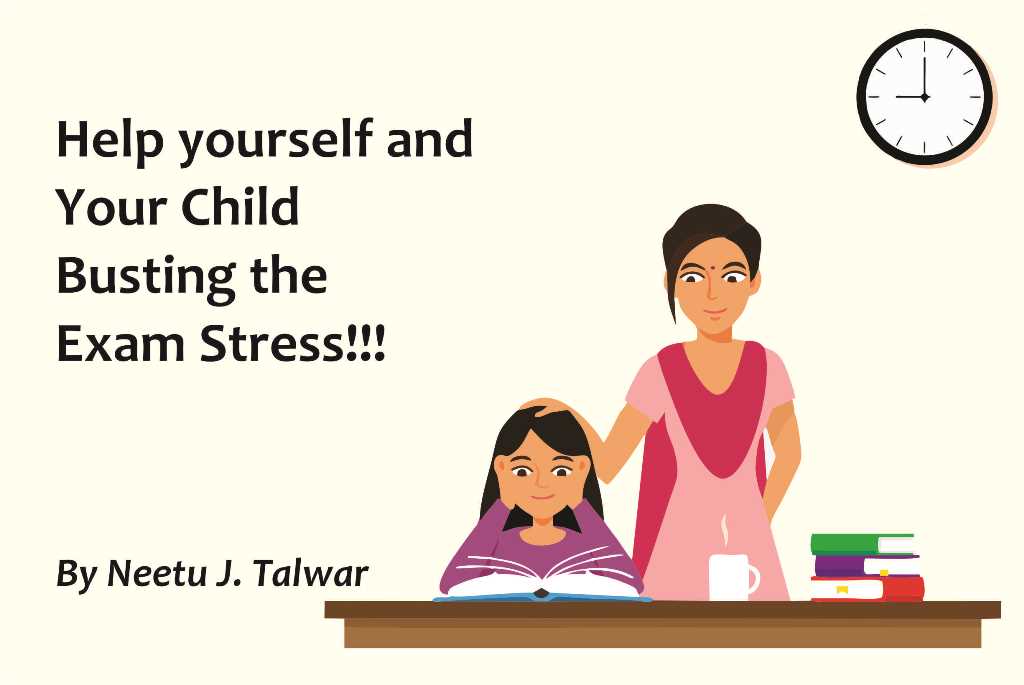

Help Yourself and Your Child Busting the Exam Stress!!!
Parents easily get stressed when the exam time of the children draw closer. Exams can really be stressful for the entire family, but in reality, it needn’t be this way. It’s understandable that the child will experience stress and anxiety. If we as parents stress out, kids will stress out even more. Instead of putting additional pressure, there is a lot that parents can do motivate their kids for scoring well and prepare systematically for their exams.
Here are 10 practical and handy tips for the parents that will help them prepare their kids score well in the exams and reduce stress:-
- Know your child’s Exam time table – A very helpful way to help reducing yours and your child’s stress during their exams. Parents must know what exam the child has got next in order to help them prepare on time. It proves to be an extra element of support. You can simply add it to your calendar or pin a copy of the exam time table onto the notice board.
- Regular monitoring of their studies– Always take some time out to monitor your child’s progress. Sit with your child and design a schedule so that he or she has enough time for revision. Lending a helping hand in building a useful schedule for their days and weeks will help them efficiently utilizing their time. Don’t let them putting off all the preparation for the last days.
- Cut back on distractions– Any distractions, be it TV, gadgets, phones, gatherings, parties or even a disturbance from siblings must be avoided. It’s imperative to give your child the right atmosphere during exams to make him perform and score well. Try to allocate a comfortable room or a space in the home for your child to study in peace.
- Do not compromise on child’s nutrition – Your Child health might get affected while dealing with exams pressure. An extra and special care is very much required keeping in mind the pressure child has on his mind. Adding fresh and seasonal fruits may do wonders for them. It helps them improving their concentration levels.
- Enough sleep is fundamental – Be it school or exam, enough sleep is essential for a child to perform well. Teenagers have a habit of catching up on social media before bed which can cut the sleep time resulting in them being tired right before their exam. Prohibiting device in bedroom especially during exams or cutting off the internet is highly recommended. Installing parental control is also advisable during exam time.
- Help them to be active – Encourage them to take breaks between studies. As studying continuously will tire out the brain and affect the ability to retain knowledge. A power nap, stretching exercises, listening to music OR dancing can refresh and re-energize them. Processed food, high caffeine or sugar intake can make kids anxious during exam days. Teenagers are recommended not to exceed 100 ml of caffeine a day. Encourage them to take plenty of water.
- Never compare your child – Comparing your child with other kids, using negative words to demean them, or questioning their caliber on the basis of scores will just hurt the sentiments of the child. His true potential shouldn’t be measured with scores in the exams. Parents must remember that exams are just one of the many challenges your child will face and it’s not the end of life. So, take it easy!
- Reward your child efforts- Rewarding your child is important to motivate them to put their best foot forward. Don’t bribe them with expensive gifts. A simple family outing or catching up with friends or cousins after the exam can help the child to take his pressure off.
- Identifying warning signs, if any – Its imperative to ensure your child’s mental well-being too. It’s natural to feel anxious during exams. But if there are signs of extreme anxiety, loss of appetite, anger issues or irritated mood, these could indicate that the child is not keeping well. Always keep a check, intervene and talk to them at the right time.
- Stay calm – Don’t build too much pressure on them. Stand in support of your child, believe in his abilities, help them preparing for the exams without overburdening them with your expectations.
So, stay calm! And if you can’t, fake it till you make it. Try to hold your stress inside and not to discuss with your child.
Hope these tips will help you and your child staying stress free in the days of examinations. These tips will not only help them coping with stress but will also form the right outlook for exams.
Author
Neetu J. Talwar
ESL Trainer and Parenting Coach from Deep
1

Do you want to be a millionaire parent?

Millionaire #mindset for kids.
All of us are born with this gift. Just go back in your early magical years, almost all in 0-5 years, we lived in abundance and not in lack.
In full confidence and not in doubt. Crawl, walk, brush, play and everything.
Let us celebrate life with the child like spirit. Your brain knows the secret. Let us relive to grow, to love, to connect, to feel more amazing and awesome.
Happy nurturing self and your child.
3H formula always works.
Head
Heart and
Hands.
Head is to explain logic, facts, figures, IQ is developed and report card is amazing.
Heart is to nurture values. Child learns values are much more important than valuables. EQ is more important than IQ. IQ makes one an executive, EQ makes one a manager and a leader.
Hands are for life skills, home skills, hand on skills going beyond knowledge and IQ.
Get set go with 3H. IQ and EQ. See you in the next blog on AQ, CQ and SQ. Be a smillanaire by being a Smiling Parent.
0

“Children are just result of your actions”


“Children are just result of your actions”
Parents expect their child to be faithful, disciplined (getup early),be polite, helpful, not to greed, exercise daily, sleep early, not to use cell phones, not to eat chocolates and ice creams, get 100% grades, study all the time. Likewise there are thousands of expectations that a child expects from their parents. Aren’t we as a parent over burdening our kids with our never ending expectations?
My question is for each and every parent, are we doing the same things which we expect from our kids to do?
I don’t think so, instead of guiding our kids, we as a parent need to be trained at first, so that we can guide our kids in very healthy and progressive manner. Many of you will contradict with my viewpoint.
Let us understand with one example of our childhood, have you ever came across with the situation at home, when your father were actually present at home and someone from our relative call on landline or came to our door step, and then we were asked to say NO to them, that no one is at home or father is not at home. Don’t we think we ourselves are guiding and teaching our children to speak lies, then how do we expect our kids to speak truth always?
Let’s understand with a story,
In 1930’s there was a lady whose son was eating Jaggery a lot, but her mother wanted his child to stop this habit, so that lady decided to go to his idol Mahatma Gandhi, and she walked many km to reach Mr. Gandhi in very hot summer and finally reached his Ashram, then she requested Mr. Gandhi to help her out so that her child stop eating Jaggery. After listening patiently Mr. Gandhi asked that lady to come back after 2 weeks, and after two weeks that lady came once again and then Mr. Gandhi asked that boy, you should stop eating Jaggery it is not good for health, boy nodded and promised that he will not be eating Jaggery anymore, Mother was so curious why Mr. Gandhi took 2 weeks to say just one line,
Mr. Gandhi smiled and said 2 week before I was also obsessed with eating Jaggery, in 2 weeks I have quit eating Jaggery, so I needed time to do this.
So from this story we all parents should learn whatever we are guiding to our kids, Are we doing the same thing, if no then try to follow yourself first. It seems very typical to do it initially, but it will definitely give you best results in longer period for sure. Children are just result of our action, whatever we are doing, If we will exercise there is more chance that our child will exercise, if getup early our child will get up early, if we speak truth our child will speak truth, if we are polite, our child will be polite, if we share things and daily experiences with our kids then our child will also do the same with us. These small changes can persuade our kids to do what we expect from them.
“So our children are just result of our actions, so check your actions first, change your habits, change your daily routine, it will persuade your child to follow it, because your child will not do whatever you ask them to do, they will do whatever they see”.
Mohnish Gahnolia
Parenting Coach


17

Parental Guilt


Parental Guilt
You feel guilty that you should be doing more.
You feel guilty when you’ve spent too much money on them.
You feel guilty when you’re not paying enough attention to your kids.
You feel guilty when your work and do-do list occupy your head when you should be present with them.
You feel guilty about that argument you’ve had with your spouse in front of them.
And you feel really, really guilty when you’ve blown your top and yelled at them.
Such and many more parenting emotions nobody ever warned Us about.
Those moments of frustration and anger building to the boiling point and before you know it, you’ve said something you wished you could take back.
Pause, Take A Deep Breath
Mostly every parent, have lost it cool someday or situation.
Many of Us, you’ll hear confessions followed by self-beating.
Maybe, after the 7th time telling your mid- schooler to shut down the video game and get to his math homework, you stunned yourself by that loud scream.
Maybe you had enough of your kids’ fighting over a particular toy so you thrashed it away in bin to end the chaos.
Whatever happened, you felt like an out-of-control.
How are your kids supposed to respect you? How are YOU supposed to respect you?
You know one thing for sure: you really don’t like yourself in these moments. Its Pretty natural to feel that way as kids are developing at pretty fast pace than your actions.
Few tips to stay out of this feeling and overcome them, which we do practice in my courses are
Stop comparing
Just as you shouldn’t compare Yourself to other parents and also comparing your child with others can fuel guilty feelings.
All that really matter in the end is that you are doing best to your knowledge, Lovingly and unconditionally.
These thoughts will slowly vanish when you align your thoughts and take necessary actions with love, instead of focusing on getting it perfect.
Be kind on yourself
Once you identify that you are empty of self love its may be challenging to showcase and flow that out. Hence its necessary to refill before giving that out.
We need to reframe self-love with self-care and not over indulgence in certain activity. i.e., shopping, etc.
Plan a break to caress yourself, sleep, read, spend time with nature and do what you love & recharge so that you bounce back happily.
Find people whom you can talk to and one who guides you
Though opening up on personal feeling and thoughts is never an easy task specially when it comes with fear of being judged.
The key is to vent out and allow the feeling come out of it freely. Only then will you have the freedom of that guilt.
Live in present
By becoming more present in each moment so that you can see and feel your reactions as they unfold.
Responsiveness comes from engaging your conscious mind instead of allowing the subconscious to rule the show.
That means that the key to more effective and fulfilling parenting is to become more conscious, so you can respond INSTEAD OF react.
‘GET THE FREEDOM BY GETTING BETTER AND BETTER EVERYDAY.’
Jagruti Gouda
DEEP Parenting Coach
1

UNDERSTANDING ANGER; LEARN TO HANDLE IT , NOT TO GET RID OF IT
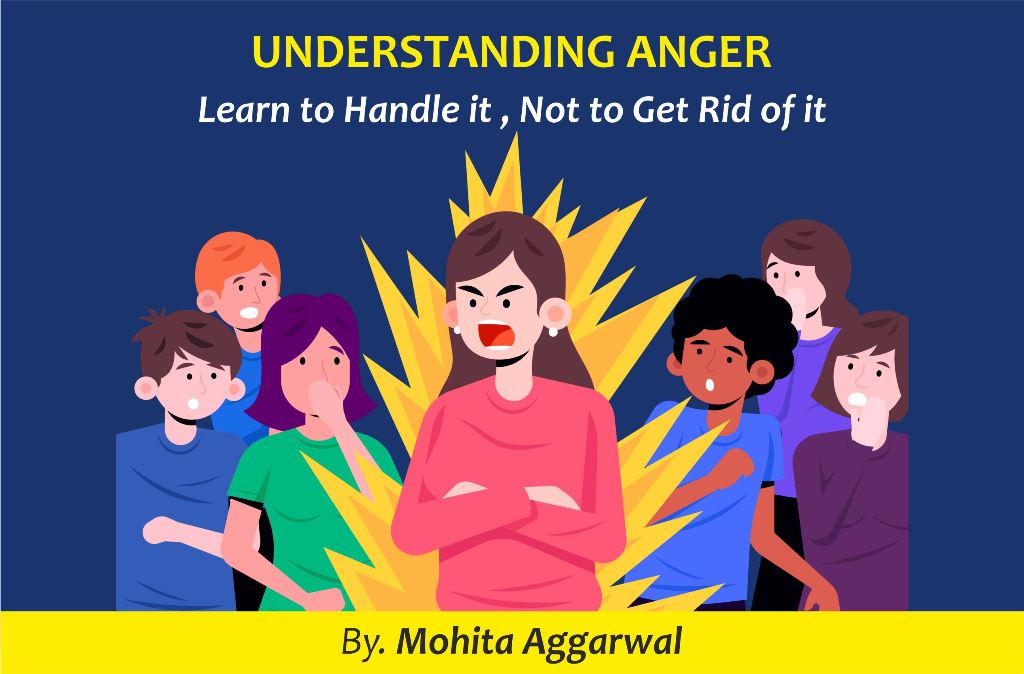
 To start with, I always give this advice to all with anger issues, do not try to get rid of it but learn how to manage it as this is a more realistic goal. Let us take a closer look at the essence of anger. Its basic nature is demand, this demand can be from oneself, others or from the world, and it is connected to our ego component. Unfortunately, humans sometimes fail to realize when their expectations turn to demands. Let me exemplify this, I should be the best influencer on Instagram (demand on oneself), my parents should have the same goals as me (demand on others) and, people should accept me as the best singer in the world (demand from the world). What I mean to say is that if people become aware of their language and change the modals of SHOULD to PREFER, there can be a significant mind shift in them as it is a known fact that our language helps us change our beliefs and these beliefs in turn change our thoughts and thus our behavior. Therefore, I request all those who have anger issues to change their modals of must and should to prefer and say for instance, I will prefer if I become the best influencer on the Instagram, I will prefer if my parents share the same goal as me and finally, I will prefer if the world accepts me as the best singer. Thus, the focus here is on becoming aware of your language and trying to use a more flexible language.
Since I have mentioned the word aware, I will emphasize on it as the first step to transform oneself. If a person is aware of his or her non-useful patterns of thoughts and behaviors, he can move towards change. How does one become aware? This is created by self- reflection and analysis which is a cognition only we humans possess when compared to other animals. It is definitely a great gift as when we become aware of our triggers which make us angry, we can remove ourselves physically from the person or situation, in other words use the avoidance technique.
To understand anger further, I will have to bust a few myths related to anger. Firstly, that venting out your anger helps. To clarify, research says that venting out anger has no benefits; in fact, it is detrimental to all, the person, others and the environment. So, I recommend that all with anger problems delay it rather than venting it. Let us talk about the second myth which is that a person can have a calm demeanor when angry. This is not possible for sure, so I suggest instead of an unrealistic outcome, we focus on a more realistic one and try to achieve a healthy anger rather than an unhealthy one. Let me explain how your anger can be healthy, instead of shouting and blaming, use an assertive language and blame the issue and not the person. When our language is respectful and the tone befitting then we are being assertive in the true sense. This takes a lot of practice but it is certainly achievable.
I would like to leave you with a couple of techniques for managing anger.
Because I am an ardent fan of positive psychology, I would suggest you to use the visualization technique which is a solution focused technique often used for people with anger difficulties. Ask yourself the below questions:
If you wake up after 3 years and your anger has disappeared, then,
- What would you do differently?
- What behaviour would you like to stop?
- How would you be behaving with others without this anger?
- What would your day look like?
- Would your goals be different?
Let me describe how this helps, initially this activity gives the hope to the individual that he can get rid of his anger, secondly, it helps him see the advantages of not having this not so useful behaviour and it helps to gain another perspective that he has a choice to behave differently. Lastly, this imagination takes the person to his goals which are opposite to his problems.
At the end, I would like to recommend a technique included in Mindfulness which encourages us to be in here and now and observe the incident AS IS. I want to be very clear that the only thing a person who is angry can do is take deep breaths as anger arouses our nervous system and it also affects many other systems of our anatomy. Any suggested technique will be useful once they have calmed their excited body. Let me throw some light on this activity, close your eyes and recall an event when you felt really angry and open your eyes after 30 seconds and talk about how that felt and you would surely have felt something of the actual feelings. Close your eyes again and this time recall that time calmly from the outside. Viewing it as a CCTV camera or as an observer, but this time imagine how it could have been different without this negative emotion of anger. Reviewing this memory, lowers your emotion and attachment and makes you pay attention to aspects you were not aware of before, maybe, your physiology or your voice modulations. In this case, we are encouraging them to use their logical brain and encouraging detached observation. There is no doubt that when we are angry , we go into our emotional brain and we need to come out of it and go to our logical brain to take better decisions. This technique helps in cognitive restructuring and understanding the cognitive aspect of anger as a third person without being bias.
Al things considered, I would like to conclude and say that our goal is not to do away with anger but manage it. If we train our mind and remind it this goal, we will not waste our energies and time in throwing away this anger it but in handling it in a better manner.
Author
Ms. Mohita Aggarwal
Psychological Counselor, An Educator and a Parenting Coach
6
Latest Posts
-
 THE INVISIBLE THREADS: PARENTING BEYOND INSTRUCTIONS
Parenting is often mistaken as a role of teaching children how to…
0 -
Raising Humans, Not Report Cards: A Gentle Look at Child Development
Understanding Child Development: A Parenting Coach’s Perspective If there’s one thing I’ve…
0 -
This Child Is Problematic…Or Are We Missing the Real Problem?
We often hear parents and teachers say; “He/ she is an adamant…
3 -
-
 04 Best Parenting Tips to Calm Down Any Toddler in 1 Minute.
How can you get your kids to stop throwing tantrums? Well, I…
0