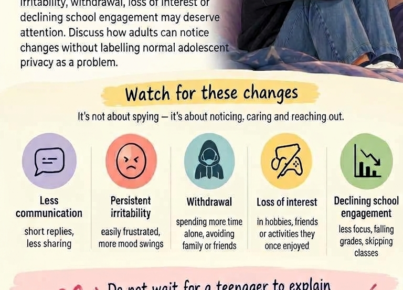
Why Children Stop Sharing Their Feelings with Their Parents
Sometimes, children don’t stop talking because they have nothing to say. They stop because they are afraid of how we might respond.
Have you ever asked your child, “How was your day?” only to receive a one-word answer: “Fine”?
Have you noticed your teenager sharing more with friends than with you? Or your younger child becoming unusually quiet after making a mistake?
As parents, we may assume that our children are becoming secretive, stubborn, or distant. But sometimes, there is a deeper reason: they may not feel emotionally safe enough to share what is truly happening in their hearts.
1. When Correction Comes Before Connection
Imagine a teenager named Aarav who comes home with disappointing marks. He gathers the courage to tell his mother, hoping she will listen.
Instead, she immediately responds, “I told you not to waste time on your phone! Why can’t you be more responsible?”
Aarav becomes silent.
His mother believes she is correcting his behaviour and teaching him responsibility. But Aarav may walk away feeling misunderstood rather than supported.

When children expect criticism, comparison, or a lecture every time they share a problem, they may gradually learn to keep their struggles to themselves.
Before correcting a child, connect with the child.
2. Children Need to Be Heard, Not Immediately Fixed
When children share their worries, parents naturally want to offer solutions. We want to protect them from pain and help them make better decisions.
But sometimes, children don’t need an immediate solution. They need someone who will listen without judging them.
Instead of saying, “That’s not a big problem,” try saying:
“I can see that this is upsetting you. Would you like to tell me more?”

Instead of immediately giving advice, ask, “Would you like me to listen, or shall we think of a solution together?”
These small changes communicate an important message: Your feelings matter to me.
3. Avoid Comparing Their Struggles
Statements like “Look at your cousin,” “Your friend can do it,” or “When I was your age, I never behaved like this” may seem motivating to adults.
However, repeated comparisons can make children feel inadequate or ashamed.
Every child has a different temperament, learning pace, personality, and emotional experience. Children need guidance and boundaries, but they also need to know that their worth is not measured against someone else’s achievements.

Celebrate their efforts, acknowledge their progress, and help them learn from mistakes without making them feel that they are a disappointment.
4. Create Small Moments of Emotional Safety
Building trust doesn’t always require long conversations or special outings. Often, it begins with a few undistracted minutes every day.
Try these simple practices:
- Put your phone aside when your child wants to talk.
- Ask open-ended questions such as, “What was the hardest part of your day?”
- Listen without interrupting or rushing to judge.
- Acknowledge their feelings, even when you disagree with their choices.
- Keep your promises and apologise when your own reaction is unfair.

Most importantly, respond calmly when your child tells you something difficult. You can still set firm boundaries while treating their feelings with respect.
Remember, emotional safety does not mean allowing every behaviour. It means making sure children can speak honestly without fearing humiliation or rejection.
5. Rebuild the Connection, One Conversation at a Time
If your child has already stopped sharing, don’t demand that they open up immediately. Trust cannot be forced; it grows through consistent experiences of being heard and respected.
You might begin with a simple sentence:
“I realise that sometimes I correct you before I fully understand you. I’m sorry. I want to listen better, and I’m willing to work on that.”
Your child may not respond immediately. That’s okay. Let your actions reinforce your words.

Over time, patient listening and respectful communication can help create a relationship in which children feel more comfortable seeking support when life becomes difficult.
A Final Thought for Every Parent
Our children may forget many of the instructions we give them, but the way we make them feel when they are vulnerable can leave a lasting impression.
The goal is not to become a perfect parent. It is to become a parent who is willing to listen, learn, apologise, and grow alongside their child.
Before asking, “Why doesn’t my child tell me anything?” let us gently ask ourselves, “What does my child experience when they tell me something?”
Because sometimes, the first step towards raising a confident child is not teaching them to speak up. It is showing them that their voice is safe with us.
With awareness and empathy, let’s raise emotionally secure children.

S. Nilofer Rahi
Parent Empowerment Mentor | Founder, Amazing Parenting Consultancy
Amazing Parenting — Connection Before Correction.