Blogs

Difference between feelings and behaviour.

*Question from a Parent – My child is very Emotionally Sensitive, how do I deal with him?*

*Smart Positive Parenting*

At any age, crying is a normal response to being overwhelmed by strong feelings, like anger, fear, stress or even happiness. Some children, however, cry more than others.

Those same children may get angry more often, may feel frustrated faster, and may get overly excited compared to their peers too. While there’s certainly nothing wrong with an overly emotional child, it can make life a little bit more difficult for them.

Sometimes parents are embarrassed by overly emotional kids. Help your child to have a Healthy Relationship with their Emotions. Don’t confuse Emotions for Weakness.

*Explain the difference between Feelings and Behaviours*

It’s important for you and your children to learn how to express emotions in a socially appropriate manner.

Screaming loudly in the middle of the street or throwing a temper tantrum at home or school isn’t OK.

Tell your child that he can feel any emotion he wants—and it’s OK to feel really angry or really scared or sad.

But, make it clear that he has choices in how he responds to those uncomfortable feelings.

So even though he feels angry, it’s not OK to hit.

Or just because he feels sad, doesn’t mean he can roll around on the floor cry.

When you talk to your child about emotions also show them the emoticons and ask them to label it. In that way they can learn more about emotions and how to express it appropriately.

Smile and Spread the Smiles with be_smartparents.

From Arwa Sunelwala

The Hidden Cost of Constant Scolding: What It Does to a Child’s Brain

A recent news report about a teenager leaving home due to excessive parental scolding for studies has raised an important question: What happens to a child’s brain when they are constantly criticized?

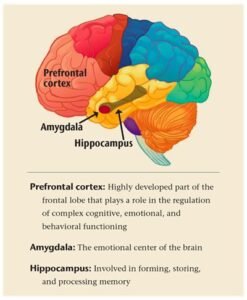
Neuroscience shows that frequent scolding activates the amygdala, the brain’s fear center, leading to heightened stress levels. Chronic stress can shrink the hippocampus, affecting memory and learning, while overactivating the prefrontal cortex, which regulates emotions. Studies reveal that children exposed to harsh parenting are at a higher risk of anxiety, depression, and self-esteem issues.

A 2023 study from Harvard University found that children who frequently experience verbal aggression from parents exhibit brain activity similar to those exposed to physical abuse. Another study by the American Psychological Association reported that 62% of children subjected to constant yelling struggle with emotional regulation in adulthood.

Constant criticism doesn’t just affect emotional well-being, it also impacts social skills. Children raised in high-stress environments may develop difficulties in forming healthy relationships and trusting others. Over time, these struggles can manifest in academic performance and professional settings, limiting their potential for success.

So, what’s the solution?

We need to work on providing healthy and congenial environment to the children for their proper all round development.

Reframe your words, replace criticism with constructive conversations. Instead of “Why can’t you ever listen?” try “Let’s figure this out together.” Creating a safe emotional space fosters trust, resilience, and stronger parent-child bonds.

It’s essential for parents to practice mindful communication. Using positive reinforcement, active listening, and emotional validation can significantly improve a child’s self-worth and confidence. Simple acts of empathy and patience can transform a child’s outlook on life and strengthen the parent-child connection.

Parenting is tough, but emotional safety is the foundation of a child’s well-being. Let’s break the cycle of fear-based parenting and build homes filled with understanding and support.

#Parenting #ChildDevelopment #MentalHealth #PositiveParenting

How to Handle Mom Guilt Without Feeling Overwhelmed.

Mom Guilt??

💭 “I should be doing more for my child.”
💭 “I shouldn’t have taken that break.”
💭 “Why did I lose my patience?”

Sound familiar? Mom guilt is real, and it’s exhausting. 😞 We constantly feel like we’re not doing enough, but here’s the truth:
Guilt doesn’t make you a bad mom—it means you care. ❀ Instead of letting it drain you, let’s reframe it into something positive.

👇 Here are 5 common mom guilt moments and how to shift your mindset:

✅ 1. Feeling like you’re not a “perfect mom”
📌 Guilt: You see other moms doing crafts & fun activities while your child is watching TV.
💡 Reframe It: Social media is a highlight reel. Your love and presence matter more than picture-perfect moments.

✅ 2. Yelling & losing patience
📌 Guilt: You snapped at your child and now feel terrible.
💡 Reframe It: Apologizing and showing emotional repair teaches your child valuable life skills.

✅ 3. Taking a break for yourself
📌 Guilt: You finally get a moment to rest, but guilt whispers, “You should be with your child.”
💡 Reframe It: A happy, rested mom is a better mom. Self-care isn’t selfish—it’s necessary.

✅ 4. Feeling like you didn’t do enough today
📌 Guilt: The day was chaotic, and you feel like you failed.
💡 Reframe It: The small moments—hugs, bedtime cuddles, a smile—are what truly count. 💛

✅ 5. Asking for help
📌 Guilt: You feel bad asking your partner or family for help.
💡 Reframe It: You don’t have to do it all alone. Strong moms ask for support.

✹ Let’s normalize letting go of mom guilt! If you’ve felt this way, you’re NOT alone. Drop a ❀ in the comments if this resonates!
📱 Which of these do you struggle with the most? Let’s chat in the comments! 👇

Happy Parenting !!!

#MomGuilt, #ParentingStruggles, #MotherhoodUnfiltered, #WorkingMomLife, #StayAtHomeMom, #MomLifeBalance, #ParentingJourney, #MomWellness, #SelfCareForMoms, #MindfulParenting, #EmotionalWellbeing, #MentalHealthForMoms, #ParentingCoach, #LifeCoachForMoms, #PersonalGrowth, #EmpoweredParenting, #RaisingHappyKids, #SNiloferRahi, #AmazingParentingNilofer, #amazingparenting

Nature vs. Nurture: How Parenting Shapes the Development of a Child.

   ” The environment is not just something that acts on us, it’s something we actively engage with, shaping it and being shaped by it in return.” –  David Moore, 2017, Developmental Psychologist

Nature versus Nurture, an age-old debate has fascinated psychologists, educators, and parents alike. Nature refers to our genetic inheritance, the biological predispositions we receive from our parents. Nurture, on the other hand, encompasses all the environmental influences that impact us like upbringing, social interactions, education and cultural experiences. While nature provides the blueprint, nurture acts as the architect, shaping the final structure.

The question isn’t which matters more, but how we can embrace both to shape the best versions for our children.

Nature: The Blueprint Within
Nature is the set of genetic instructions encoded in our children’s DNA—their height, eye color, temperament, including predispositions for talents or challenges, even the susceptibility to certain diseases. Nature sets the stage, but it’s nurture that directs the play.

Nurture: The Environment We Create
If nature plants the seeds, nurture is the soil, sunlight, and water. Nurture is the Sculpting Hand. The love, the support the opportunities we give, the values we teach, the way we respond to their triumphs and tantrums. A nurturing environment can foster resilience, beliefs, behaviors, spark curiosity, and instill confidence.

Parenting: The Art of Balance
Parenting is not about choosing between nature and nurture but about harmonizing the two. Parents are the primary architects of their child’s environment, providing the love, care, and guidance that are essential for healthy development.

Here’s how parents can bridge the gap and unlock their child’s full potential

Create a nurturing environment: Provide a safe, loving, and stimulating environment where your child feels secure and supported. Resilience doesn’t come from a perfect life but built through challenges.

Provide opportunities for learning: Expose your child to a variety of experiences and learning opportunities that will help them grow and develop their innate abilities

Foster healthy relationships: Encourage positive social interactions and help your child develop strong, healthy relationships with others.

Be a role model: Children learn by observing the adults around them. Model kindness, patience, and perseverance and show them how to handle setbacks with grace.

                                                                                        : https://rhapsodyinwords.com/2015/10/15/thoughts-on-nature-vs-nurture/

The Power of Synergy:
Nature and nurture don’t compete—they collaborate and by recognizing by understanding the intricate interplay of both we as a parent have the incredible power to bridges the two, shaping our children by honoring their innate traits and nurturing their growth, creating a conducive environment for them where their unique potential can truly shine.

“Parenting isn’t about perfection; but the true art and joy of raising a child, it’s about guiding your child to become the best versions of themselves.”

Raising Boys and Girls as Equals: A Parenting Responsibility

“We must teach your children independence, and they will never be a burden—to themselves or to others.”

Parenting is not about raising a son or a daughter; it is about raising a capable human being. Yet, in many families, boys and girls are still raised with different expectations. Girls, alongwith working hard to make a flourishing career are taught to manage household chores, while boys are given the freedom to focus only on their studies and careers. This imbalance does not just affect individual lives—it affects families, marriages, and society as a whole.

A son who never learns to cook, clean, or care for his own space grows up expecting his wife to do it all for him. Similarly  daughter who is never taught basic life skills because “house help will do it” becomes dependent on others for the simplest tasks. In both cases, they enter adulthood unprepared for life’s realities. When marriage happens, due to stereotype thought process especially in India,  these unrealistic expectations create stress, frustration, and often, broken relationships.

The way children are raised today is one of the major reasons why many marriages fail early. Women refuse to carry the entire weight of the household alone, and men, who were never taught to share responsibilities, struggle to adjust. On the other hand, if a girl is raised believing she never has to do any household work, she may also find it difficult to contribute effectively in a partnership.

The solution is simple but powerful—raise children, not based on gender, but based on life skills. Every child, whether a boy or a girl, should know how to cook, clean, do laundry, manage their own belongings, and handle responsibilities. And when they form a family, they should work as a team, not as individuals carrying separate burdens.

The goal of parenting is not to raise sons who become burdens on their wives or daughters who become burdens on their new families. The goal is to raise strong, independent individuals who thrive—both alone and together.

Permissive parenting vs Pragmatic parenting

A famous quote on parenting says  “parenting is a verb ..it’s not about who you are as parent, it is about what you do as a parent “.

In the present scenario it’s also about what type or category of parenting you belong to, are you a
‘Permissive parent’ or a ‘pragmatic parent’?
Most of the  parents who are  busy in being the provider and also carving a nieche for themselves would find this categorisation worthless .
 Parenting Is task which continues 24/7 to  till the last breath . Who has the time to qualify and quantify parenting? A question asked very often present generation parents.
Let’s first try and understand what is permissive parenting?
1) A permissive parent more or less
functions with out any  set of  rules or boundaries.Most of the time such  a parent does not believe in defining or concurring to any orthodox defination of parenting.
2) Since the parent does not believe in limiting the child with in the confines of any  restrictions ,more often than not the child gets by  his/her unreasonable demands. Parent has no issues in over indulging the child despite knowing it’s ill-effects on the child.
3)A permissive parent is soft and nurturing no doubt but may  fail  to provide  concrete guidance to the child . A permissive parent believes in allowing the child to take major decisions of life . The expectations of a permissive parent are quite different and rather low from the child .This thought process can be determental in  the academic/ professional/ growth of the child.A permissive parent prioritises the immediate happiness and mental state of the child and is over all concerned about the self esteem of the child.
A permissive parent is a well meaning parent but the long rope which the parent extends to the child can be dangerous and damaging . For instance, a permissive parent may allow the teenage child to explore and experience the dark side of growing up . The  intentions of  the parent is that the child will learn about life by self exploration . However this can prove to be damaging and can bring harm to the child’s way.
Pragmatic parenting on the other hand is also known as gentle parenting. A pragmatic parent is kind, systematic yet believes in rules regulations and limits.
1) A pragmatic parent totally believes in a balanced and focussed approach.Despite  hectic work schedule and social comittments a pragmatic parent’s main focus is the overall development of the child.
2)A pragmatic parent is a firm parent ,i.e some one who will impose restrictions and boundries yet is ready to accomodate and make few changes here and there to keep the child happy.Adaptability and flexibility are some of the tools which a pragmatic parent will use as per the situation.
3) A pragmatic parent ‘s major focus is to teach the child survival techniques and  lessons in life skills. Teaching problem solving methods, taking responsibility, accepting failure and learning from them are very high on the to do  list of such a parent .Infact  as per various reports 75%to 80% parents would like to be pragmatic/ gentle parents and are adapting the methods of this kind of parenting style.
In  nutshell one can say that a balanced approach to parenting is what can be  described as best method of parenting .
Styles of parenting may vary but the main objective of any parenting style is  to help the child develop into a happy and reasonable human being .
As parent, I don’t think there is any set SOP of parenting.. parenting can be best described as process which is dynamic and has to  adopt to  different shades of life.
Permissive parenting… explore and experience on your own… joy ful yet not without perlis

Popular posts from this blog

Stress To Smile …A journey worth documenting

Permissive parenting vs Pragmatic parenting

A famous quote on parenting says  “parenting is a verb ..it’s not about who you are as parent, it is about what you do as a parent “.

In the present scenario it’s also about what type or category of parenting you belong to, are you a
‘Permissive parent’ or a ‘pragmatic parent’?
Most of the  parents who are  busy in being the provider and also carving a nieche for themselves would find this categorisation worthless worthless.
 Parenting Is task which continues 24/7 to  till the last breath . Who has the time to qualify and quantify parenting? A question asked very often present generation parents.
Let’s first try and understand what is permissive parenting?
1) A permissive parent more or less
functions with out any  set of  rules or boundaries.Most of the time such  a parent does not believe in defining or concurring to any orthodox defination of parenting.
2) Since the parent does not believe in limiting the child with in the confines of any  restrictions ,more often than not the child gets by  his/her unreasonable demands. Parent has no issues in over indulging the child despite knowing it’s ill-effects on the child.
3)A permissive parent is soft and nurturing no doubt but may  fail  to provide  concrete guidance to the child . A permissive parent believes in allowing the child to take major decisions of life . The expectations of a permissive parent are quite different and rather low from the child .This thought process can be determental in  the academic/ professional/ growth of the child.A permissive parent prioritises the immediate happiness and mental state of the child and is over all concerned about the self esteem of the child.
A permissive parent is a well meaning parent but the long rope which the parent extends to the child can be dangerous and damaging . For instance, a permissive parent may allow the teenage child to explore and experience the dark side of growing up . The  intentions of  the parent is that the child will learn about life by self exploration . However this can prove to be damaging and can bring harm to the child’s way.
Pragmatic parenting on the other hand is also known as gentle parenting. A pragmatic parent is kind, systematic yet believes in rules regulations and limits.
1) A pragmatic parent totally believes in a balanced and focussed approach.Despite  hectic work schedule and social comittments a pragmatic parent’s main focus is the overall development of the child.
3)A pragmatic parent is a firm parent ,i.e some one who will impose restrictions and boundries yet is ready to accomodate and make few changes here and there to keep the child happy.Adaptability and flexibility are some of the tools which a pragmatic parent will use as per the situation.
4) A pragmatic parent ‘s major focus is to teach the child survival techniques and  lessons in life skills. Teaching problem solving methods, taking responsibility, accepting failure and learning from them are very high on the to do  list of such a parent .Infact  as per various reports 75%to 80% parents would like to be pragmatic/ gentle parents and are adapting the methods of this kind of parenting style.
In  nutshell one can say that a balanced approach to parenting is what can be  described as best method of parenting .
Styles of parenting may vary but the main objective of any parenting style is  to help the child develop into a happy and reasonable human being .
As parent, I don’t think there is any set SOP of parenting.. parenting can be best described as process which is dynamic and has to  adopt to  different shades of life.
Permissive parenting… explore and experience on your own… joy ful yet not without perlis
Pragmatic parenting..kind yet firm and focussed

Popular posts from this blog

Stress To Smile …A journey worth documenting

The Honest Truth About Being a New Mom: Challenges, Fears, and Wins


Who is a New Mom? A new mom is a woman who has recently transitioned into motherhood, whether through childbirth, adoption, or fostering. This phase marks the beginning of a new chapter filled with joy, learning, and adaptation. Every new mom embarks on a unique journey, navigating through physical, emotional, and psychological changes.

Common Challenges Faced by New Moms

  1. Physical Recovery After childbirth, a mother’s body undergoes significant changes. Healing from a vaginal delivery or cesarean section, coping with hormonal fluctuations, and managing postpartum discomfort can be overwhelming.
  2. Sleep Deprivation Frequent nighttime feedings, diaper changes, and the baby’s unpredictable sleep patterns often lead to exhaustion.
  3. Breastfeeding and Feeding Concerns Many new moms struggle with latching issues, low milk supply, or deciding between breastfeeding and formula feeding.
  4. Emotional Adjustments Postpartum mood swings, feelings of inadequacy, or even postpartum depression can cloud the initial joys of motherhood.
  5. Lack of Personal Time Balancing baby care with household chores and personal time can leave moms feeling stretched thin.
  6. Unsolicited Advice and Judgment From relatives to strangers, everyone seems to have an opinion on how to raise a baby, which can be both overwhelming and frustrating.
  7. Financial Strain Managing the expenses of a new baby, such as diapers, healthcare, and childcare, can add stress to the household.

Common Fears of New Moms

  1. Fear of Not Being Good Enough New moms often doubt their parenting skills and worry about making mistakes.
  2. Health Concerns for the Baby From minor rashes to feeding difficulties, every issue can feel like a crisis.
  3. Fear of Losing Personal Identity Adjusting to the demands of motherhood while maintaining a sense of self is a common concern.
  4. Fear of Relationship Strain Many moms worry about how their relationship with their partner might change after the baby’s arrival.


How to Overcome Challenges and Fears

  1. Seek Support Build a support network of family, friends, and fellow moms. Don’t hesitate to ask for help when needed.
  2. Educate Yourself Attend parenting classes, read books, or follow reputable online resources to boost your confidence.
  3. Prioritize Self-Care Taking short breaks, exercising, eating well, and indulging in activities you love can recharge your energy.
  4. Communicate with Your Partner Open communication with your partner can help divide responsibilities and strengthen your bond.
  5. Join a Mom Community Being part of a mom’s group can provide emotional support and practical advice.
  6. Consult Professionals If you experience persistent fears or emotional distress, seek guidance from a healthcare provider or counselor.

Conclusion Becoming a new mom is a transformative journey filled with highs and lows. While the challenges and fears can feel overwhelming at times, they also provide opportunities for growth and learning. Remember, it’s okay to seek help, take breaks, and prioritize your well-being. With the right support and resources, every new mom can thrive and embrace the beautiful adventure of motherhood.

As a Parent Empowerment Mentor, I am here to walk this journey with you, offering guidance, support, and tools to help you transform challenges into opportunities for connection and growth. DM at 7674008589, Email :- amazingparenting2024@gmail.com.

HAPPY PARENTING !!!

When Should Kids Get Their First Phone? A Parenting Coach and Mom of Two Weighs In

As a parenting coach and a mom of two, I’m no stranger to the heated debate about when kids should get their first phone. It’s a question I hear often: “What’s the right age to hand my child a phone? Should I cave to the pressure because every other kid seems to have one?” These are valid concerns, especially in a world where smartphones have become almost synonymous with social connection, education, and even safety.

But here’s the thing: While technology has undeniable benefits, giving a child a phone isn’t just about the “when” – it’s also about the “why” and the “how.”

My Perspective: Delayed Gratification Worked for Us

As a mom, I made a deliberate choice to delay giving my son a phone until he reached grade 11. By that time, he had a better sense of responsibility, understood the value of boundaries, and had more self-regulation to handle the distractions that come with smartphones. My younger child, now 12, still doesn’t have a phone, despite the growing peer pressure.

Has it been easy? No. There’s a constant tug-of-war between wanting to keep up with the norm and holding firm to our family values. Most of their friends had phones long before grade 6, making them feel “left out” at times. But I’ve learned that what works for one family might not work for another – and that’s okay.

The Peer Pressure Factor

As parents, we face the added challenge of peer pressure – ours and theirs. The argument that “every other kid has one” can feel overwhelming. You don’t want your child to feel isolated or excluded, but you also don’t want to give in to societal trends that might not align with your family’s values.

Here’s the truth: Kids are incredibly adaptable. They might feel the pinch of not having a phone, but they will also learn how to navigate social settings without constant digital interaction. That independence and resilience, in my experience, is worth the short-term discomfort.

What’s the Right Age for a Phone?

There isn’t a universal answer, but here are some factors to consider:

1. Maturity Level: Is your child able to follow rules and manage time responsibly? A phone is a tool that requires discipline to use effectively, especially with social media and gaming.

2. Purpose: Why does your child need a phone? If it’s primarily for safety or communication, a basic phone with calling and texting capabilities might be enough.

3. School Policies: Many schools have strict guidelines around phone usage. Consider how these rules might align with your child’s needs.

4. Family Dynamics: Every family has unique values and routines. Decide what works best for your household instead of comparing with others.

What Type of Phone Should They Start With?

If you’ve decided it’s time for your child to have a phone, consider starting small:

‱ Basic Phones: Devices without internet access or apps are great for younger kids. They allow calls and texts but eliminate distractions like social media.

‱ Parental Controls: If you opt for a smartphone, ensure it has robust parental controls to limit screen time, restrict downloads, and monitor usage.

‱ Set Clear Boundaries: Discuss expectations around phone use, including when and where it’s appropriate to use it.

Can We Really Do Without Phones?

It might feel impossible to navigate modern parenting without giving your child a phone, but it’s not. Phones can be helpful, but they aren’t the only way to stay connected or ensure your child’s safety. Family rules, open communication, and alternatives like family-shared tablets or old-school landlines can bridge the gap.

Final Thoughts

The decision to give your child a phone is deeply personal and varies from family to family. My approach has been to delay it as much as possible, not because I’m anti-technology, but because I believe in teaching my kids to thrive without constantly being tethered to a device.

As parents, our job is to equip our kids with the skills to navigate life – not just the digital world. Whether you decide to give your child a phone at 10, 12, or 16, the most important thing is to guide them through it with clear expectations, boundaries, and conversations about responsibility.

After all, the goal isn’t just to raise tech-savvy kids but to raise thoughtful, self-aware, and resilient individuals.


THE JUICE OF CONFIDENCE

My younger son was born with a condition where his pigmentation and melanin production were quite slow. This gave him an appearance unlike that of a typical Indian child—he had blue eyes, golden hair, and an extremely fair, almost pinkish-white complexion. When he was a baby, it didn’t matter much what people said because he couldn’t understand. However, as he grew older, these comments started to affect him emotionally.

My elder son, who doesn’t share these features, also struggled. He often felt overshadowed and would sometimes cry for attention. This made me think deeply about how to help both my children embrace themselves for who they are.

I eventually found a simple yet effective way to explain it. I told my younger son that our bodies have a special “juice” that determines the color of our hair, eyes, and skin. Instead of using complex terms like melanin and pigmentation, this relatable analogy helped him understand his uniqueness.

Armed with this explanation, my son began confidently responding to comments about his looks, saying, “I like the way I am because of the juice in my body.” While people might not understand the concept of the juice, it gave him a sense of pride and clarity about his identity.

This journey taught me an important lesson: as parents, we need to instil self-love and acceptance in our children from an early age. When we embrace and celebrate them as they are, it empowers them to do the same. Loving and accepting oneself is far more important than seeking validation from others.

Parents must also be mindful of the words used around children, especially by guests or relatives who might casually make hurtful remarks. A polite but firm reminder to be considerate can go a long way.

My younger son, Kush, also has a lisp and sometimes pronounces “K” as “T,” so his name sounds like “Tush.” While some people find this cute, repeated teasing can be overwhelming for a child. To help him, I taught him to confidently spell out his name (K-U-S-H) when people mispronounce it or tease him. This small step gave him a sense of control and self-assurance.

Now, Kush handles such situations with grace. If someone goes too far, he calmly but firmly sets boundaries, making it clear that such behavior isn’t acceptable. Other times, he simply walks away, choosing to respond instead of reacting.

This approach has been a life lesson for my boys—they’ve learned that while people may say whatever they want, it’s up to us to decide how much we let it affect us.


The challenge of parenting- and the road to master it.


To learn any skill we have training, courses,  degrees available but parenting is that skill for which we don’t have any training or courses available. Every parent raises their children according to their own childhood experience. Parents want to raise their child in the best possible way.  Parents try to give their children all those possible things or facilities for which they were deprived of when they were a child. They tried to avoid those behaviours which they did not like when they were young. Every parent does their best for their children.

But an ignorant or unknowing parent makes some blunders in their parenting journey about which parents themselves don’t know, what would be the impact of that particular behaviour on their child’s mental health or their personality. The parent was never trained about how to behave with the child or how to handle the child in all the stages of the life during his parenting journey so that they can raise an independent child with an all rounder personality and who is happy, content and physically and mentally healthy.

The parent is implementing  all their insecurities, their mental health impact of  their own childhood trauma or experience on their own child.  They don’t have the proper approach or tools or techniques so that they can handle the child’s issues in a positive way because they were never told or educated on how to raise the child in a proper way. For example if any parent had  a very strict upbringing he will also try to give a strict parenting to his child and the child might grow into a young adult who is low in self esteem, self worth,  has difficulty in making decisions,  becomes introvert and is low in confidence.

 Or on the other hand parents may give too much of the liberty to the child and that too without limits and as a result the child can put his life at risk,  may develop any bad habit,  disrespecting others or grows into that kind of young adult who is overconfident, careless, irresponsible or with unhealthy physical and mental health.

Sometimes parents speak very negative or demotivating words to their children unwillingly. When the children are very young say at the age of 4 to 9 years their subconscious mind is always open to receive. The children at this age are highly receptive so whatever parents say to their child good or bad it becomes their  belief system and the words which they speak to their child  becomes their Anchors. If the parents say any negative sentence like ‘“you are duffer”,  “you are good for nothing”, “ you are not good enough”,” you cannot do anything in life”, these words become mantras in child’s mind and starts popping up again and again and the child starts believing in this. And when he grows up these words will always hold him back. He will not be able to make any decisions,  he will have self doubt,  over thinking and he will be seeking validation from others. The parents did not do this behaviour intentionally,  in fact parents love their child a lot, they care for the child and due to their  insecurity and fear of failure of their child they use these words so that the child will start doing well academically and get good scores in exams and become successful in his life. Parents were not aware of the impact of this behaviour or action.  In this case parents are not at fault. Parents were never trained on Parenting.  Parents were never taught how to parent their child.

 In our schools also the child who is scoring good grades in Maths and Science and whose linguistic and logical intelligence is high is supposed to be an intelligent child.  Parents too believe in that fact. But apart from it there are other multiple intelligences also. According to professor Harvard Gardner any ability which can bring you name,  fame, money and success is also termed as intelligence.  There are 8 types of Intelligence: 1. Linguistic 2. Logical  3. Visual 4. Physical 5. Musical 6. Interpersonal 7. Intrapersonal  8.Naturalist.  If the child is having any one intelligence from the above list he will be termed as intelligent.

From the ancient days the approach we used to raise the children was carrot and stick. But now in today’s scenario this approach is not effective on our delicate and sensitive children. Now the new approach invented by child psychology is to “Award and Ignore”.The good behaviour of the child should be rewarded and ignore the bad one.

We must have courage to encourage the positive behavior of our Child. We should catch the child doing good things or behaviour and encourage and appreciate it. It will give a positive reinforcement to the children. That is why parenting coaching is the need of the hour. Every parent should be trained to parent mindfully and recognise their responsibility. So that their children can reach their true potential and this cycle of generational trauma is broken,  so that their children will become highly responsible citizens of India with an all rounder personality. And India will become a nation of healthy minds, strong bodies and happy souls. Let us learn parenting better!

Your Parenting Coach

 Pushpa Vashist

(9034912593)