Olympus Blog

In the Olympus blog you'll find the latest news about the community, tutorials, helpful resources and much more! React to the news with the emotion stickers and have fun!
Bottom image

The Resilient Parenting Mindset

The Resilient Parenting Mindset
How to Raise Emotionally Strong Children Without Losing Yourself
Parenting is one of the most beautiful journeys in life, but it is also one of the most emotionally demanding. There are days when your child surprises you with love, curiosity, and kindness. And then there are days when the same child refuses to listen, throws a tantrum, struggles with school, or challenges every boundary you set.
In those moments, parenting becomes more than a question of what to do. It becomes a question of who we become while responding to our children.
Do we react with anger, fear, and frustration? Or can we pause, understand the situation, and respond with patience, clarity, and confidence?
This is where a resilient parenting mindset makes a difference. Magic happens in parents’ response.

Resilient parenting does not mean being a perfect parent, staying calm every second, or never making mistakes. It means developing the emotional strength to navigate challenges, learn from difficult moments, repair relationships, and keep growing alongside your child.
The goal is not perfect parenting. The goal is conscious, adaptable, emotionally resilient parenting.
1. What Is a Resilient Parenting Mindset?
A resilient parenting mindset is the ability to adapt to parenting challenges without losing sight of your values, your child’s emotional needs, or your own well-being.
It helps parents understand that:
A difficult day does not make them a bad parent.
A child’s challenging behaviour is an opportunity to understand a need, skill gap, or unmet expectation.
Mistakes can become learning experiences.
Emotions can be acknowledged without allowing them to control every response.
Parenting strategies may need to change as a child grows.
Resilience is not about tolerating every behaviour or removing all consequences. It is about combining love with boundaries, empathy with responsibility, and flexibility with consistency.
For example, when your child refuses to complete homework, a reactive response might be, “You are so lazy. You never listen.”
A resilient response might be, “I can see that you don’t want to start right now. Let’s understand what’s making it difficult and decide on the first small step.”
The expectation remains, but the approach changes. Instead of attacking the child’s identity, the parent addresses the problem.
That difference can influence how children learn to view themselves, manage frustration, and approach future challenges.
2. Six Types of Resilient Mindset Every Parent Needs
Resilience is not a single quality. It is a combination of emotional, mental, and behavioural skills that help parents handle everyday challenges with greater awareness.
A. An emotionally aware mindset
Understand your emotions before you respond to your child’s emotions.
Children can trigger feelings we do not always recognise immediately: helplessness, embarrassment, fear, anger, or the worry that we are failing as parents.
When a child shouts, refuses to cooperate, or ignores instructions, our response may come from our own stress rather than the situation itself.
A resilient parent learns to pause and ask:
What am I feeling right now?
What has triggered this reaction?
Does my child need guidance, a boundary, reassurance, or a moment to calm down?
Try this: Before responding to challenging behaviour, take three slow breaths and lower your voice. If you need a break and your child is safe, step away briefly to regain composure.
Remember, emotional regulation does not mean suppressing your feelings. It means choosing how to express them.
B. A flexible mindset
Be firm about your values, but flexible about your methods.
Children develop at different rates. A strategy that works beautifully for one child may not work for another. Even the same child may need different support at different developmental stages.
For example, if your child struggles to wake up for school, repeating the same angry instructions every morning may not solve the problem.
A flexible parent investigates the pattern:
Is bedtime too late?
Is the morning routine confusing?
Does the child need help preparing the night before?
Are the expectations appropriate for their age?
Flexibility is not permissiveness. You can maintain the boundary that school attendance matters while changing the routine that helps your child meet that expectation.
C. A growth mindset
Replace “My child is difficult” with “My child and I are learning what works.”
A fixed mindset labels people. A growth mindset looks for skills that can be developed.
Consider these common parenting statements:
Instead of saying

Try saying

“My child never listens.”
“How can I communicate more clearly?”
“I am a bad parent.”
“What can I learn from this moment?”
“My child is weak.”
“Which skill does my child need help developing?”
“Nothing will change.”
“What small step can we try differently?”

This approach does not ignore genuine difficulties. It helps parents focus on actions, skills, and solutions instead of becoming trapped in labels.
It also models an important life lesson for children: making a mistake does not mean you are a failure.
D. A self-compassionate mindset
Many parents are compassionate towards everyone except themselves.
They expect themselves to remain patient after a stressful workday, manage every household responsibility, meet their child’s needs, and never lose their temper.
When they inevitably struggle, they criticise themselves.
But shame rarely provides a useful parenting strategy. Self-compassion helps parents acknowledge a mistake without allowing it to define them.
Instead of saying, “I shouted again. I am a terrible parent,” try:
“I was overwhelmed, and I did not handle that moment well. I can take responsibility, repair the relationship, and practise a better response next time.”
Self-compassion is not an excuse. It is a healthier starting point for accountability and change.
E. A patient and present mindset

Children need guidance that respects the time it takes to learn.
A child may need many reminders to put toys away, manage frustration, share with others, or complete a routine. These skills develop through practice, support, and age-appropriate expectations.
When parents expect immediate maturity, ordinary developmental struggles can become daily power struggles.
Practise being present rather than trying to control every moment.
Give one clear instruction at a time.
Get your child’s attention before speaking.
Allow reasonable time for transitions.
Notice effort and progress, not just the final result.
Listen to understand before rushing to correct.
Patience does not mean allowing unsafe or harmful behaviour to continue. It means setting limits without expecting a child to possess skills they are still learning.
F. An optimistic but realistic mindset
Resilient parents maintain hope without pretending that every problem is easy.
A child may struggle academically, experience friendship difficulties, or have trouble managing emotions. Positive thinking alone will not resolve every challenge.
Realistic optimism says:
“This is difficult, but we can understand it, seek help when needed, and take the next useful step.”
It helps parents avoid two extremes: catastrophising every setback and dismissing genuine concerns.
A resilient parent can acknowledge a problem, make a plan, and believe that improvement is possible.
3. How to Build a Resilient Parenting Mindset in Everyday Life
Resilience is not built through one motivational speech or one parenting workshop. It develops through small, repeated choices.

Here is a practical five-step approach you can begin today.
Step 1: Pause before reacting
When your child tests a boundary, your first response may be emotional. Create a small gap between the trigger and your reaction.
Try this simple reset:
Stop speaking for a moment.
Take three slow, comfortable breaths.
Relax your shoulders and jaw.
Ask yourself, “What response will help rather than escalate this situation?”
You do not have to solve everything in the first five seconds. Sometimes the most powerful parenting action is to avoid making a difficult moment worse.
Step 2: Separate the child from the behaviour
A child’s behaviour may be unacceptable, but that does not make the child bad.
Instead of saying, “You are naughty,” say, “Hitting is not acceptable. I will help you find a safe way to express your anger.”
This distinction preserves the child’s dignity while maintaining a clear boundary.
It also helps children understand that they can take responsibility for their actions without believing that they are fundamentally unworthy of love.
Step 3: Replace control with connection and guidance
Parents naturally want to protect children from discomfort, failure, and disappointment. But trying to control every outcome can leave children with fewer opportunities to practise decision-making and problem-solving.
Instead of immediately solving every problem, ask:
“What do you think you could try?”
Then offer guidance appropriate to the child’s age and situation.
Connection does not mean agreeing with everything your child says. It means creating enough trust for your child to listen, learn, and return to you when life becomes difficult.
Step 4: Learn to repair after conflict
Even emotionally aware parents lose patience sometimes. What matters next is how they take responsibility.
You might say:
“I was frustrated and raised my voice. That was not the way I wanted to speak to you. I’m sorry. We still need to discuss what happened, but we can do that calmly.”
A genuine repair includes acknowledging your behaviour, validating the impact, and returning to the original boundary when appropriate.
You do not lose authority by apologising. You demonstrate that accountability applies to adults as well as children.
Step 5: Build your own support system
Parenting becomes harder when a parent is exhausted, isolated, or carrying every responsibility alone.
Resilience includes recognising when you need help.
Consider:
Sharing responsibilities with a partner or trusted family member.
Making time for rest, movement, and meaningful relationships.
Speaking with trusted parents who offer support rather than judgment.
Seeking guidance from a qualified professional when difficulties persist.
Asking for help before stress becomes overwhelming.
A parent’s well-being is not separate from parenting. It is part of the foundation that makes responsive parenting possible.
4. Resilient Parenting in Real-Life Situations
Let us bring these ideas into the moments many parents experience every day.

Situation 1: Your child refuses to study
Reactive mindset: “You are wasting your future. You never take anything seriously.”
Resilient mindset: “Let’s understand what’s making this difficult. Are you confused, tired, or unsure where to begin?”
The lesson: Address the obstacle before assuming the child lacks motivation.
Situation 2: Your child has a public tantrum
Reactive mindset: “Stop this immediately! Everyone is watching.”
Resilient mindset: “My child is having a hard moment. I can keep them safe, stay calm, and discuss the behaviour when we are both ready.”
The lesson: Respond to the child’s needs without making decisions based on other people’s opinions.

Situation 3: Your teenager makes a mistake
Reactive mindset: “I knew you would do this. You never learn.”
Resilient mindset: “Let’s look honestly at what happened, what you can learn, and how you can make a better decision next time.”
The lesson: Help teenagers develop accountability and independent thinking rather than relying on fear.
Across all three situations, the principle remains the same: connect first, understand the challenge, and then guide with clear boundaries.
5. How Your Mindset Becomes Your Child’s Inner Voice
Children learn not only from what parents teach but also from what they repeatedly experience.
When a child regularly hears, “You can learn from mistakes,” they may gradually become more comfortable trying again.
When they repeatedly hear, “You always fail,” they may begin to interpret ordinary setbacks as evidence that they are incapable.
This does not mean that one sentence determines a child’s future. Children’s development is influenced by many relationships, experiences, and individual differences. However, consistent patterns of communication can help shape how children understand themselves and approach challenges.

A resilient parenting mindset can support three important developmental foundations:
Emotional regulation: Children observe how adults handle frustration, disappointment, and uncertainty.
Self-worth: Respectful correction helps children distinguish a mistake from their identity.
Problem-solving: Guided opportunities to make decisions and learn from consequences build confidence and independence.
The aim is not to raise children who never feel upset, afraid, or disappointed.
The aim is to help children develop the skills and support they need to navigate those feelings and recover from life’s challenges.
6. The Five-Minute Daily Resilience Practice for Parents
You do not need to transform your entire parenting style overnight. Begin with five intentional minutes each day.
Your Daily Parenting Mindset Reset
Use this checklist at the end of each day.
One minute: Reflect
What moment challenged me emotionally today?
One minute: Recognise
What was I feeling, and what triggered it?
One minute: Reframe
What is another way to understand my child’s behaviour?
One minute: Repair or reconnect
Is there a conversation, apology, or moment of connection I need to offer?
One minute: Resolve
What is one small response I will practise tomorrow?
0 of 5 practices completed
Reset checklist–
Small practices, repeated consistently, can help you become more aware of your reactions and more intentional in your parenting.
You will still have difficult days. Your child will still have difficult moments. Progress is not the absence of struggle; it is your growing ability to navigate struggle with greater awareness and skill.
7. When Should Parents Seek Additional Support?
Sometimes parenting challenges persist despite a parent’s best efforts. Ongoing family conflict, severe emotional distress, persistent school difficulties, or behavioural concerns that interfere with everyday life may require additional support.
Seeking help from a qualified child psychologist, mental health professional, paediatrician, or parenting specialist is not a sign of failure.
It is a responsible step towards understanding the child’s needs and identifying suitable strategies.
Parents also deserve support for their own emotional well-being. If stress, anxiety, anger, or exhaustion is becoming difficult to manage, professional support can help.
Resilient parenting does not mean handling everything alone. It means recognising what you can manage, what you need to learn, and when you need help.
Conclusion: Raise Yourself as You Raise Your Child

Parenting is not simply about raising a child. It is also an opportunity to understand our own beliefs, heal unhelpful patterns, strengthen our emotional awareness, and become more conscious of the example we set.
You cannot control every experience your child will encounter. You cannot prevent every mistake or remove every disappointment.
But you can work on the mindset you bring into your home.
You can learn to pause instead of react, guide instead of label, set boundaries without humiliation, and repair relationships when things go wrong.
And when you struggle, you can begin again.
A resilient parent is not a parent who never falls apart. A resilient parent is one who learns to pause, reflect, reconnect, and grow.
At RevealU, the belief is simple: when parents gain clarity about their own mindset, they can create more conscious, supportive relationships with their children.
Because sometimes, the most important change in a child’s world begins with a small change in the parent’s mind.
Your child does not need a perfect parent. Your child needs a parent who is willing to learn, connect, and grow.
Ready to Transform Your Parenting Mindset?
Let’s make a difference with dignity and respect in every life we nourish.
Every child is different, and every parent has a story. Start by understanding your own emotional patterns, communication habits, and parenting triggers.
Through RevealU by Dr. Yogita Sharma, explore practical ways to build self-awareness, strengthen parent-child connection, and develop a more conscious approach to parenting.
Take the first step towards a calmer, more connected parenting journey.
Mindset & Parenting Coach
RevealU by Dr. Yogita Sharma

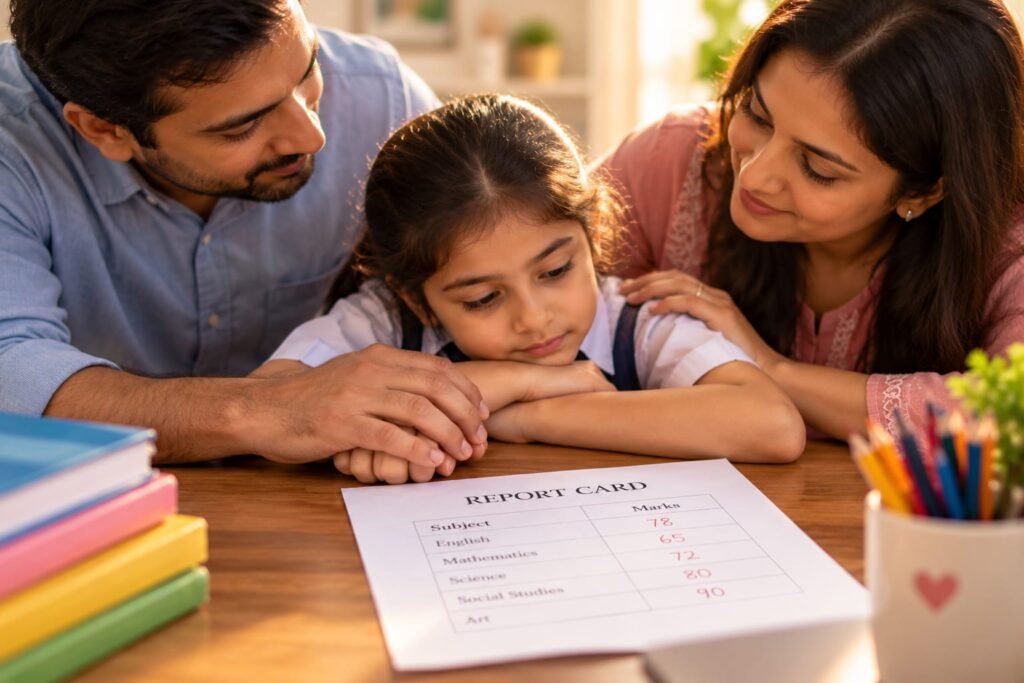
Beyond The Report Card ; Are We Trading Our Child’s Happiness For Grades

When our children come home with their report cards are they excited to share their achievements –or quietly wishing that parents will notice their efforts, growth, and courage behind them too?

​“Kitne marks aayey?’’

​For many children, this is the very first question they hear after an exam. Before anyone asks what they learned or how they feel, their marks take centre stage. A child scores 85%, and we ask about the missing 15%. Slowly, they learn a dangerous lesson: their efforts don’t matter as much as their achievements.

​Without realizing it, we teach them that being good is not enough. They must always be better.

Before We Ask About the Marks, Let’s Ask Ourselves
As parents , we all want our children to succeed. But have we ever paused to think about
what our children experience when they bring home a report card. When our child loses
marks, do we become curious about the difficulty they faced, or do we immediately point
out what went wrong Do our children feel comfortable telling us that they failed at something, or are they afraid
of disappointing us?
These questions are not meant to make us feel guilty. Parenting is not about getting
everything right; it is about becoming more aware of the messages we send through our
everyday reactions.

A child may not remember every mark they scored, but they may remember the look on our
face when they showed us their result. They may remember whether we listened,
compared, encouraged, or criticised.
So, the next time a report card comes home, perhaps we can begin with three simple
questions:
“How do you feel about your result?
What did you find difficult?
How can I help you?”

Sometimes, the most valuable lesson a child learns from a report card is not about marks at
all. It is whether they can make mistakes, keep learning, and still feel loved.

​ The Trap of “Never Enough”

​Every parent wants their child to succeed and have a secure future. But when academic performance becomes the sole measure of a child’s worth, healthy encouragement morphs into heavy pressure.

​Curiosity Dies: Instead of learning to discover, children study merely to avoid criticism.

​Fear Replaces Confidence: A child who once loved asking questions stops speaking up, terrified of making a mistake.

​The Weight of Silence: Pressure isn’t always yelling. It is deeply felt in subtle sighs, disappointed looks, and the heavy silence that follows a “poor” result.

​The Hidden Message in Comparisons

​“Look at your cousin. She always scores above 90%.”

​We think these statements motivate. Instead, the child hears: “I am not good enough as I am.” Repeated comparisons teach children that a parent’s love and acceptance must be purchased with high test scores. This completely ignores their individuality—a singular focus on math scores blinds us to a child’s unique gifts in art, empathy, or creative problem-solving.

​  Ways to Raise a Healthy Learner

​How can we redefine success at home? Here is how to build resilience alongside intelligence:

​1. Praise the Process: Appreciate the late nights and the hard work. Acknowledge their effort when they tackle a difficult problem, regardless of the final score.

​2. Replace Comparison with Curiosity: Instead of asking, “Why didn’t you get an A?” try asking, “Which part of the paper was the trickiest for you?”

​3. Normalize Mistakes: Make your home a safe place to discuss failures. Listen first, and help them figure out what to do differently next time without shame.

​4. Celebrate Character: Loudly applaud their kindness, honesty, courage, and teamwork. Value extends far beyond numbers.

​5. Protect “Kid Time”: Play, hobbies, and rest are crucial for brain development. They are not distractions from learning; they are a core part of it.

​The Ultimate Takeaway

​One day, our children will face real-world challenges—relationships, career setbacks, and tough decisions—that no exam can prepare them for. They will need the emotional strength to fail and the courage to begin again.

​The next time you see a report card, celebrate the wins, discuss the gaps, but always remember the person holding the paper.

​Let us raise children who feel valued , not evaluated . Because a report card may reflects grades , but it can never measure their worth

The cost of Motherhood

We all see moms taking care of their kids, smiling, laughing. But motherhood isn’t a walk in the park. It takes many shapes and is different for everyone. I won’t say every mom finds it hard or that her life changes 200%. But for me, it had a cost.

It started before her. My body was already a struggle. I took medication to help me get pregnant, and month after month it didn’t work. My mind went down. The doubts. The feeling that my body was failing me.

When it finally worked, I couldn’t believe it. The first trimester brought a few scares, the second complications and six months of bed rest. The days got long. My husband cooked my meals and carried me through.

The first 20 months with my daughter went alright. She was easy and a fast learner. The only hard part was her sleep, and when I say hard, I mean it. For months she would only sleep on me, and the smallest movement woke her for hours. So I stayed still for 12 hours a night. I couldn’t go to the washroom. I had no time with my husband. And yet, in the dark, I would look down at her sleeping so peacefully, and it was the sweetest feeling in the world. Both were true.

Then my body changed again. Feeding became painful, and within a week I had to stop at 20 months. I took medication to stop my milk. After that came the weight gain, made heavier by steroids and constant inflammation in my body. I was tired, and I was disappointed in myself. I wanted to work on it, but I couldn’t.

Then came the guilt. Guilt for not taking time for me. Even alone, I couldn’t fully relax; my mind stayed on my daughter. Yet there was also a bit of peace, a bit of silence, and I felt guilty for that too.

There’s the guilt of being the one who holds the boundaries. Often I’m the one who says no, who ends up being the “bad parent.” When I scold her and she cries, it breaks something in me, even when I know I’m doing what a parent has to do. I’m not being cruel. I’m parenting. But in that moment, all I see is her tears, and I wonder if I’m doing it right.

And there’s the guilt of the days I can’t control my own feelings. When I’m overwhelmed, tired, or carrying too much, I’m not always emotionally present for her. She needs me, and I’m in the room but not fully there. I know she can feel it.

And then there was a recent breast surgery, which maybe wouldn’t have happened without having a child. I felt guilty for putting her through it. I remember hearing her voice, small and full of doubt, asking me not to go to the hospital. The fear in it stayed with me. Before I left, I was planning what she would eat and what she would do while I was in the hospital. During the surgery, waking up, and recovery, my mind was on her. I couldn’t go slowly, because there was work to do at home for her.

What people see is a mom in public. They see you for five minutes and decide who you are. They don’t see the hidden pain, the hidden issues, the struggles that happen in private. They don’t see the night you couldn’t move, or the month you were sure your body had failed.

I didn’t do it alone. My husband was there through everything. My mother-in-law helped a lot too. My best friend and my mom, though far away, stood by me in thought. They helped, and I don’t take that lightly.

Motherhood has cost me sleep, my body, my time, and some of my peace. But I’m still here, still learning, and still her mom in every way I know how.

And if you’re a mom carrying something nobody sees, you’re not failing. You’re carrying a lot. Be as gentle with yourself as you are with your child.

Navigating Relationships in a New Environment

Shared Future: Navigating Relationships in a New Environment


Have you ever wondered how difficult it can be to adjust to a new environment?

  • The first day of school: Your mother is not around to comfort you.
  • The first day at a new job: Your parents are not there to guide or reassure you.
  • The first day after marriage: A girl finds herself in a new home, surrounded by a new family, while her parents, grandparents, siblings, and friends are no longer around her in the same way.

These situations can leave us feeling emotionally overwhelmed, confused, and uncertain about how to think, feel, or behave. Adjusting to such changes is never easy. We may feel nervous, lonely, or even helpless as we try to find our place in an unfamiliar environment.

Have you ever experienced such feelings?

AND

Do you believe, there are ways to handle these challenges?

Today, let us focus on a particularly sensitive phase of life: a newly married woman’s relationship with her husband’s family, especially her parents-in-law, as she adjusts to a new home and a new environment.

Marriage is not just the union of two individuals; it also brings together two families, two sets of values, and different ways of living. For a newly married woman, building relationships with her new family while adjusting to unfamiliar surroundings can be both beautiful and challenging.

So, how can she make this transition smoother? How can misunderstandings be avoided, relationships strengthened, and emotional bonds nurtured from the very beginning?

Benjamin Franklin once said:

“An ounce of prevention is worth a pound of cure.”

This timeless saying reminds us that ‘taking the right precautions at an early stage can prevent small problems from growing into bigger ones’.

Let us now proceed to understand this situation by exploring a few important words, their meanings, and how and where to apply them in daily lives to create a smooth, healthy, and harmonious family environment.

These words may seem simple, but when understood deeply and practised sincerely, they can make a significant difference in our relationships, especially when a newly married woman begins her journey with her husband’s family.

Let us discover how these simple yet powerful words can help us build understanding, strengthen relationships, prevent misunderstandings, and create a peaceful and happy home.

·        1. Observation:

  • Observing and understanding the new family environment during the initial stage of marriage is very important. It helps a newly married woman understand the family’s values, traditions, habits, expectations, and ways of communicating.
  • The initial period often lays the foundation for long-term relationships and emotional patterns. Therefore, it is important to observe situations patiently rather than rushing to conclusions or reacting immediately.

How to apply it: Take time to understand the family dynamics, notice how family members interact, and learn about their preferences. Remember, observation does not mean judging others; it means understanding them better.

·        2. Communication:

  • Effective communication is the backbone of every healthy relationship. Active listening is just as important as expressing our own thoughts and feelings.
  • When family members listen to one another with patience and respect, they can reduce misunderstandings, manage daily emotions, and resolve conflicts more effectively.

How to apply it: Listen without interrupting, express your feelings calmly, and ask questions when something is unclear. Instead of assuming what someone means, give them an opportunity to explain.

·        3. Adjustments:

  • When two individuals come together from different family backgrounds, differences in habits, lifestyles, traditions, and expectations are natural.
  • Adjusting to these differences is an important part of building a healthy relationship. Flexibility, however, should come from both sides. It does not mean sacrificing one’s identity or accepting everything without question; it means finding a balance that respects everyone’s needs and individuality.

How to apply it: Be open to learning new customs, adapting to different routines, and finding mutually acceptable solutions. Give yourself and your new family time to adjust to one another.

·        4. Understanding:

  • Marriage brings two individuals together, each with a unique personality, upbringing, and set of expectations. Your spouse is your companion in this journey, not someone to be compared with others.
  • Every relationship has its own strengths and challenges. Instead of comparing your spouse or your marriage with someone else’s, focus on understanding each other, appreciating your differences, and growing together.

How to apply it: Recognise your spouse’s strengths, acknowledge each other’s feelings, and discuss your expectations openly. Nurture your relationship through trust, empathy, respect, and shared experiences.

·        5.Prenatal Care _   A Shared Responsibility:

  • The prenatal stage is an important phase in a couple’s journey towards parenthood. During this period, both partners may experience anxiety, emotional changes, and concerns about the baby’s health and the responsibilities of becoming parents.
  • A husband’s care, understanding, and emotional support can make a significant difference in his wife’s well-being during pregnancy. His involvement in medical appointments, sharing responsibilities, offering reassurance, and being emotionally available can help her feel safe, loved, and supported.
  • A mother’s physical and emotional well-being during pregnancy plays an important role in the baby’s development. Therefore, prenatal care should not be viewed as the mother’s responsibility alone; it is a shared responsibility of both partners.

   How to apply it: Listen to each other’s concerns, attend prenatal check-ups together whenever possible, share household responsibilities, and create a calm, supportive environment. Seek professional medical guidance     when needed . Remember, the journey towards nurturing a healthy child begins not only with physical care but also with love, emotional support, and shared responsibility between parents.

                                                                                                     “Nurture Relationships Today, Cherish Togetherness Forever.”


The Stone That Hurt Him: A Lesson in Moving On (An original story by Geetanjali Namboodri | Founder | Grow as Happy Parents | Katha.Vriksha

This is about a story I created for my son when he found it difficult to move on from a disappointing exam and focus on the next one.

As a mother, I have often wondered how we can help our children navigate disappointment. We want them to learn from their experiences, but we also want them to understand that one difficult moment should not take away their focus from what lies ahead.

It was during one such moment with my son, when he was struggling to put a difficult exam behind him and concentrate on the next one, that I created this story. I wanted to help him understand something that is easy to say but sometimes difficult to practice: we cannot change what has already happened, but we can choose where we direct our attention next.

And so, I told him a story – There was once a boy walking through a path. As he walked along the path, a stone struck his leg. It hurt. He felt the pain, but he had to go somewhere so he continued walking. Yet, as he walked, he kept turning back. He looked at the stone that had hurt him. He remembered the pain, replayed the moment in his mind, and kept looking back at what had happened.

An old man sitting by the path noticed him. “Why do you keep looking back?” he asked.

The boy explained how the stone had struck his leg and how much it had hurt.

The old man listened patiently and then said, “If you continue to look back at the stone that hurt you, you may not only keep reliving the pain, but you may also stumble over another stone and hurt yourself again. While you are busy looking behind, you may fail to notice what lies ahead.”

He paused and continued, “The stone has already hurt you once. Why allow it to hurt you again and again in your mind? Look ahead. There is a path in front of you, and you still have a long way to go.” The boy understood what the old man was trying to tell him.

But understanding a lesson and putting it into practice are two different things. Even after that conversation, the boy’s mind kept returning to the stone. The pain had happened, and the memory remained. He could not simply erase it because someone had given him good advice. But slowly, as he continued walking, he began to focus on the path ahead.

And eventually, he moved on.

When the story became personal

I created this story when my son had a difficult exam.

Sometimes, one disappointing experience can occupy a child’s mind long after the event itself is over. The exam may be behind them, but their thoughts remain stuck there.

What went wrong? Why did I make that mistake? Could I have done better? What if this affects my result?

The mind keeps returning to what has already happened, almost as if revisiting it could somehow change the outcome.

My son was finding it difficult to shift his attention to the next exam. The previous experience was still playing on his mind, making it harder for him to concentrate on what lay ahead.

I shared the story of the boy and the stone with him. I wanted him to understand that the disappointing exam was like the stone on the path. It had hurt him, and it was natural to feel upset about it. But repeatedly looking back would not change what had happened. Worse, it could take away the attention and energy he needed for the next exam.

He understood the message. But that did not mean the thoughts disappeared immediately.

The memories came back. The disappointment surfaced again. For a while, the previous exam continued to occupy his mind.

And that is something I have come to appreciate as a parent: understanding a lesson does not mean we can instantly put it into practice.

Sometimes, we need time to process an experience before we can truly move beyond it.

Eventually, my son began to move forward. As time passed, he was able to bring his attention back to his preparation and focus on the next exam.

He did not move on because the disappointment had never mattered. He moved on because he gradually learned to give more attention to what he could still do than to what he could no longer change.

What this taught me as a parent

As parents, we often want our children to bounce back quickly. We tell them not to worry, to forget what happened, to learn from their mistakes, and to focus on the future. Our intentions are good. We want to protect them from unnecessary stress and help them succeed. But perhaps moving on is not about asking children to forget what hurt them. Perhaps it is about helping them acknowledge the hurt without allowing it to decide what happens next.

A child who has performed poorly in an exam may need reassurance before advice. They may need time before they can concentrate again. And they may need us to remind them that one difficult experience does not define their abilities or their future. We cannot always remove the stones from our children’s paths. We cannot prevent every disappointment, every setback, or every failure. But we can help them learn how to walk forward. We can teach them to reflect on their mistakes without repeatedly punishing themselves for them. We can encourage them to learn from the past without carrying its weight into every new experience.

And perhaps most importantly, we can give them the time and patience they need to practice what we share with them. Because sometimes, our children understand our words long before they are emotionally ready to act on them.

The path ahead

Life will place many stones on our paths. Some will cause a little discomfort. Others may leave us deeply disappointed. There will be moments when we keep looking back, wondering why something happened and wishing we could change it. But when we keep looking behind, we risk missing what is right in front of us. We may stumble over another stone simply because our attention is fixed on the last one. The goal is not to pretend the stone never hurt us. The goal is to learn from that moment, acknowledge the pain, and gradually bring our attention back to the path ahead. As parents, perhaps one of the most valuable lessons we can share with our children is this: You are allowed to feel hurt. You are allowed to take your time. But do not let what hurt you yesterday take away your chance to do better today.

There is still a path ahead. There are still opportunities waiting to be explored. And there is always something we can do with the next step. Sometimes, growing up is not about never falling or getting hurt.

It is about learning, one step at a time, when to stop looking back and start moving forward.

— Geetanjali Namboodri

Grow as Happy Parents | Katha.Vriksha

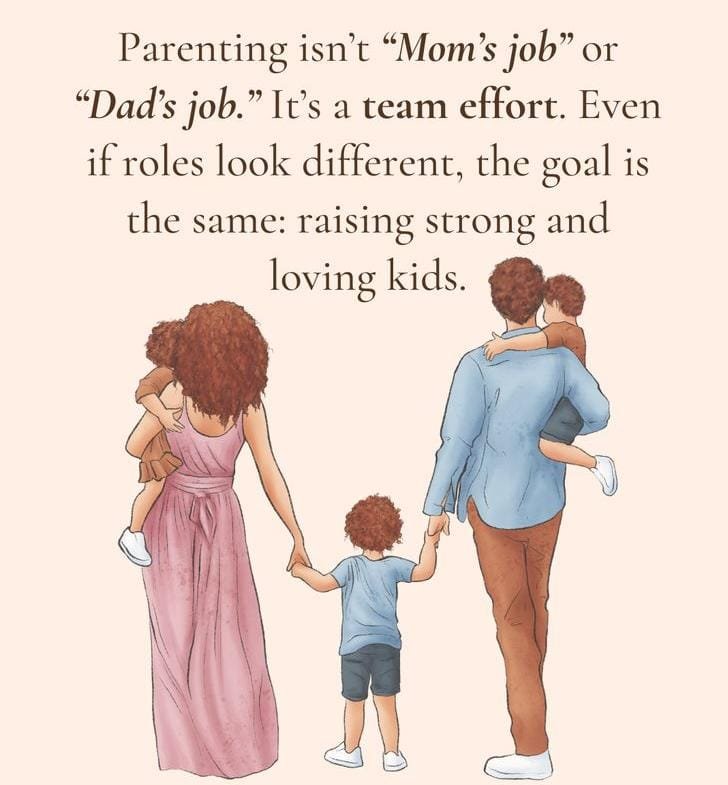
Modern Parenting is a Partnership: Raising Children Together, Not Alone.

Palvi Tanneja

Founder:The Parenting Compass/ Parenting Coach/DMIT Practitioner

Building stronger families through shared responsibility, mutual respect and teamwork

Navigating Through Parenthood Parenting is one of life’s most meaningful journeys, but it can also be one of its most demanding responsibilities. From managing school schedules and homework to handling emotional outbursts, screen-time struggles and everyday routines, raising children requires patience, time and consistent effort.

Traditionally, parenting responsibilities have often been divided along gender lines. Fathers were expected to provide financially, while mothers were expected to manage children’s daily needs and emotional well-being. Although many families continue to follow these patterns, modern parenting is gradually moving towards a more collaborative approach.

Today, parenting is not simply about dividing tasks between two adults. It is about working together to create an environment in which children feel supported, understood and secure. Modern parenting is not one parent carrying the responsibility while the other helps occasionally. It is two parents sharing the journey, the decisions and the challenges of raising a child.

1. Parenting Is a Shared Responsibility, Not One Parent’s Job In many households, even when both parents work, mothers often carry a significant portion of the invisible work of parenting. They may remember vaccination appointments, school deadlines, homework submissions, parent-teacher meetings, birthdays and changing emotional needs. This mental load can be exhausting because it involves not only completing tasks but also constantly remembering, planning and anticipating what needs to happen next. Meanwhile, fathers may contribute through financial provision, household responsibilities or occasional care giving, yet the overall responsibility for organising family life may remain uneven. Modern parenting requires us to rethink this arrangement. Shared parenting means that both parents take ownership of their children’s needs. It involves noticing what needs to be done, planning ahead and following through without waiting for instructions. When responsibility is shared fairly, neither parent has to carry the entire burden alone. It also t eaches children that caring for a family is a collective effort rather than the responsibility of one individual.

2. Different Parenting Styles Can Become a Strength Every parent brings their own experiences, beliefs and personality into parenting. One may be more structured and organised, while the other may be more flexible and spontaneous. One may focus on discipline, while the other may naturally offer reassurance and comfort. These differences are normal. Problems arise when parents treat their different approaches as a competition over who knows best. For example, imagine a child who refuses to complete homework. One parent may believe that strict consequences are necessary, while the other may feel the child needs encouragement and understanding. Instead of arguing in front of the child or undermining each other’s decisions, parents can discuss the situation privately. They might explore why the child is avoiding homework, agree on reasonable expectations and decide how to support the child while maintaining boundaries. Children do not need parents who think identically about everything. They benefit from parents who communicate respectfully and work towards shared goals. The aim is not to become identical parents, but to become a supportive parenting team.

3. Communication Between Parents Shapes the Family Environment Children are sensitive to the emotional atmosphere at home. They notice how parents speak to each other, handle disagreements and respond under pressure. Frequent criticism, blame or hostile arguments can create tension and may leave children feeling anxious or caught between their parents. Disagreements are inevitable, but how parents manage them matters. Instead of saying, “You never support me when it comes to the children,” a parent might say, “I’m feeling overwhelmed managing the homework routine. Can we discuss how to share it more effectively?” The second approach focuses on the problem rather than attacking the other person. Healthy co-parenting involves listening to each other’s concerns, discussing expectations openly and finding practical solutions. It also means avoiding situations in which children are asked to take sides, carry messages between parents or become responsible for resolving adult disagreements. A respectful partnership provides children with an important example of how people can disagree without disrespecting one another.


4. Children Need Consistency, Not Identical Parents One common concern among parents is whether they must always agree on every rule. The answer is no. Parents may have different personalities and approaches, but children benefit when important boundaries are reasonably consistent. For example, if one parent restricts screen time while the other regularly allows unlimited use, the child may become confused about expectations. Similarly, if one parent enforces a rule and the other repeatedly dismisses it, conflict can develop within the family. Parents can avoid this by discussing essential expectations together, including screen use, bedtime, study routines, respectful behavior and age-appropriate independence. Consistency does not mean being rigid. Rules can change as children grow and circumstances evolve. What matters is that parents communicate, explain decisions and avoid turning discipline into a contest for the child’s approval. When children understand the reasons behind boundaries, they have a better opportunity to develop self-discipline and responsibility.

5. Supporting Each Other Emotionally Makes Parenting Easier Parenting can bring exhaustion, frustration, worry and self-doubt. A difficult day at work, financial concerns or a child’s behavioral challenges can leave either parent feeling overwhelmed. In such moments, partners need to recognise that they are on the same team. Sometimes, one parent may need practical help. At other times, they may simply need someone to listen without immediately offering advice or criticism. A simple question such as, “You’ve had a difficult day. What would help you right now?” can open a meaningful conversation. Supporting one another also means recognising each other’s efforts, expressing appreciation and making space for rest. Neither parent should feel that asking for help is a sign of weakness or that managing stress alone is part of being a good parent. When adults feel supported, they may find it easier to respond to their children with patience and thoughtfulness.

6. A Strong Parenting Partnership Benefits Children When parents work together, children can benefit in several ways. They see cooperation in action. They learn that responsibilities can be shared, differences can be discussed and mistakes can be repaired. They may also experience greater predictability in daily routines and a clearer understanding of family expectations. Equally important, children learn that love is expressed through everyday actions: listening, caring, respecting boundaries and taking responsibility. A healthy parenting partnership does not require a conflict-free household. It requires adults who are willing to reflect, communicate and make adjustments when necessary. Even when parents live separately, they can work towards respectful co-parenting wherever it is safe and practical to do so. The focus should remain on the child’s well-being rather than using parenting decisions to continue adult conflict.

7. Five Small Steps Towards Better Teamwork Building a stronger parenting partnership does not require dramatic changes. Small, consistent actions can make everyday family life more manageable. Have a weekly parenting check-in. Discuss schedules, responsibilities, upcoming challenges and what each parent needs. Divide ownership, not just tasks. Let each parent take responsibility for particular routines from planning through completion. Avoid undermining each other in front of the children. If you disagree, discuss the issue privately and revisit the decision together. Make time for your relationship. Parenting is important, but maintaining friendship, affection and communication between partners also matters. Appreciate each other’s efforts. A sincere “Thank you for handling that today” can help each parent feel valued. Remember, a partnership develops through practice. There will be difficult days, misunderstandings and moments when responsibilities become unbalanced. The important thing is to keep communicating and making thoughtful adjustments.

Final Thoughts: Two Parents, One Shared Journey Modern parenting is not about determining which parent works harder or who makes the better decisions. It is about recognising that raising a child requires cooperation, adaptability and shared commitment. When parents move away from traditional assumptions and begin treating each other as equal partners in care giving, they create more opportunities for children to experience a supportive and respectful family environment. No parent has to do everything perfectly. No family will have every responsibility divided equally at every moment. What matters is a genuine willingness to recognise each other’s contributions, share the load and work towards the same goal: helping children grow into confident, caring and responsible individuals.

At The Parenting Compass, we believe that parenting becomes more meaningful when it is approached as a partnership—one built on mutual respect, shared responsibility and a commitment to growing together. Because raising a child should never be one parent’s journey alone. It is a shared responsibility, a shared learning experience and a shared opportunity to build a stronger family.

Palvi Tanneja


Motherhood : Finding Extraordinary in Everyday

Motherhood Magic: Finding Extraordinary in the Everyday

Whenever I think about motherhood, I wonder how beautifully life changes when a tiny little human becomes the centre of your world. It is amazing to think about how a baby grows inside a mother and how, even before we hold our little one in our arms, we begin to love, dream, worry, and pray for them. To me, motherhood is one of God’s most beautiful creations.

But is motherhood always magical? I believe it is, though not always in the way we imagine. Along with happiness, excitement, and unconditional love, motherhood brings challenges, doubts, sacrifices, and moments when we question ourselves. Becoming a mother is not just about giving birth to a child; it is about beginning a journey of physical, mental, and emotional transformation.

A woman’s body goes through so many changes during pregnancy and after delivery. Gaining weight, trying to lose it, and adjusting to a new version of ourselves can sometimes be difficult. Recently, we have seen and read about celebrities being trolled online for their post-pregnancy weight gain. It makes me wonder why society often forgets the incredible journey a woman’s body has been through and expects her to look a certain way, even during such a life-changing phase.

The journey of motherhood begins long before we hold our baby. It begins with the moment we decide to become parents, and the first joy arrives when we discover that we are pregnant. Along with that happiness come so many questions: Will I be a good mother? Will my baby be healthy? Will I be able to handle all these changes? How will my life change?

There is excitement, but there is also uncertainty. There are dreams, but there are worries, too. And through it all, one thing becomes clear: just as a baby needs care and nourishment, a mother needs love, understanding, and emotional support.

Perhaps this is where the real magic of motherhood begins—not in having all the answers, but in learning to embrace the journey, one day at a time.

 Finding Extraordinary in the Everyday

Motherhood is a beautiful journey in a woman’s life. It is one of God’s most beautiful creations. I have always wondered how amazing the journey of bringing a baby into this world is.


Becoming a parent is one of life’s greatest joys. It is a dream many of us hold close to our hearts. We wait for nine months, hoping and praying for the moment when we can finally hold our little one in our arms. We long to hear that first cry, gaze into those tiny eyes, and shower our baby with all the love we have. We look forward to every milestone—the first words, the first steps, and all the magical moments that come with raising a child.

Sometimes, however, this journey becomes challenging when we discover that our baby has certain health challenges. Such moments can bring uncertainty, fear, and many unanswered questions. This is when a mother needs love, understanding, and support more than ever.

There is a saying, “Paradise lies beneath the feet of mothers.” A mother is not just someone who gives birth and feeds her child. She is also the first educator, the quiet nurturer, and the spiritual architect of generations. Through her values, wisdom, and care, she helps shape hearts and minds. Her presence becomes the foundation of the home, and her prayers often reach heaven before her voice is even heard on earth.

Motherhood brings immense joy, but it also brings challenges. Every day is a new learning experience. You grow alongside your child and learn to adjust your routine according to their needs. These moments may sometimes feel exhausting, but they become precious memories that you cherish throughout your life. Every child is unique, so there is no copy-and-paste approach to parenting. You need to create your own rule book based on your child’s needs. You may have to make sacrifices along the way, but believe me, they are worth it. Sometimes, a simple smile from your child is enough to make you forget all your worries.

Motherhood is not just about teaching children; it is also about learning from them. They teach us patience, love, empathy, and the joy of appreciating little things. It is an everlasting journey of learning and growing together.

There is also an invisible side to motherhood: emotional overwhelm. Mothers may feel guilty about not spending enough quality time with their children or struggle to remember all the things that need to be done. They, too, need to take care of their emotional well-being. Support from their spouses, encouragement from their families, and understanding from those around them can help mothers feel valued and confident.

Motherhood is not about perfection; it is about connection. Children do not need flawless parents. They need parents who listen, acknowledge their mistakes, repair relationships, and reconnect with them. Do not compare yourself or your child with others. Everyone has their own pace of growth and development. Accept your child’s unique qualities, nurture their strengths, and never label them based on their challenges.

Dear mothers, you do not have to be perfect to make your child’s world magical. Your willingness to understand, your courage to begin again, and your love expressed through everyday moments are already creating something extraordinary.

Motherhood is not magic because mothers have superpowers. It is magic because ordinary moments, when filled with love and understanding, can shape a lifetime.

“What is one small moment with your child that reminded you of the magic of motherhood?”


🌟 The Little Words Your Child Will Never Forget: The Art of Praising Your Child

As parents, we often find ourselves reminding our children what not to do. But how often do we pause to notice what they are doing right?

A little appreciation, a warm smile, or a simple “I saw how hard you tried” can mean so much to a child.

Praising our children isn’t about making a big deal out of everything they do. It’s about noticing their efforts, appreciating the little things, and encouraging them along the way.

Here are six simple ways to make praise more meaningful.

1. Be Specific 🎯

Instead of just saying “Good job!”, tell your child what you liked. Try saying, “I loved how you put all your toys back in their place.” This helps them understand and repeat positive behaviours.

2. Appreciate the Effort đŸŒ±

Don’t wait for your child to get everything right. Notice their attempts too. A simple “You kept trying even when it was difficult” encourages them to keep going.

3. Keep It Genuine ❀

Children don’t need constant compliments; they need honest ones. Say what you truly mean, and let your appreciation come naturally.

4. Praise What They Do, Not Just Who They Are ✹

Instead of saying, “You are so smart,” try, “You thought of a lovely way to solve that puzzle.” This encourages children to value their efforts and explore new ways of doing things.

5. Appreciate in Public, Correct in Private đŸ€—

Celebrate your child’s little wins, especially when they enjoy being appreciated. When something needs correcting, speak to them calmly and privately. Children need guidance, not embarrassment.

6. Catch Them Doing Something Right đŸŒŒ

We are often quick to notice mischief, mess, or mistakes. Let’s also notice when our children share, help, listen, or try to do something independently. A little appreciation can go a long way in encouraging these behaviours.

A Little Reminder for Parents 💛

From the toddler years onwards, children learn so much through our everyday interactions. The way we respond when they try, make mistakes, help others, or do something independently matters.

We don’t have to praise every little thing or make every moment a celebration. Sometimes, a smile, a hug, or a few kind words are enough.

Let’s try to notice more of what’s going right, appreciate the little efforts, and spend less time pointing out what’s going wrong.

Because sometimes, the smallest words of appreciation become the biggest encouragement for our children.

Bachpan and Beyond
Nidhi Poddar | Parenting Coach

Connect Before Connecting: Building a Strong Bond with Your Child

When children do not feel connected to their parents or share a strong bond with them, they may begin to seek relationships outside the home.

Connection is not a one-day process; it is a lifelong journey. Just as a seed grows into a plant when it is watered and nurtured, a child needs love, care, and attention to grow emotionally and physically.

When a child is in the mother’s womb, the mother takes care of herself by paying attention to what she eats, taking the necessary medicines, and ensuring the child’s well-being. When the child enters the physical world through birth, they continue to need care, affection, and physical touch from their parents.

During the initial years, it is especially important for the mother to be present and provide the child with love, care, and security.

As parents, we need to learn how to build a strong bond with our children. We need to understand what quality time means and how we can spend it meaningfully with them. We should explore different ideas and put them into practice to strengthen our connection with our children.

As children grow, their efforts and achievements should be appreciated regularly. Appreciation should be expressed in front of others, while corrections should be made privately.

When children do not feel wanted or loved within their families, they may look for connection outside the home. When they do not find love at home, they may seek affection and acceptance elsewhere.

If they find the right people, it may be a positive experience. But what happens if they find the wrong partner or someone outside the home who gives them inappropriate advice? Such influences may lead them in the wrong direction.

As parents, it is our duty and responsibility to work on ourselves and strengthen our bond with our children.

So, how can you build a stronger connection with your child?

First, understand your child and take care of them like a flower. Use encouraging words that help them feel loved, valued, and confident.

To give more love to your child, you must also develop love within yourself.

We often become mechanical in our daily lives, managing responsibilities at home and at the office. Somewhere along the way, we forget ourselves and become so focused on completing tasks that we stop paying attention to our own emotional well-being.

The lives we lead often feel like a race. We are constantly competing with ourselves, trying to accomplish more and finish everything on time.

But what if we paused for a moment, took a deep breath, and looked within ourselves? What if we created space to reconnect with our inner selves and nurture love within us?

The irritation and stress caused by trying to complete every task on time, without giving ourselves enough rest, can affect our behaviour. We may unintentionally become impatient or react harshly toward our children, which can negatively affect their emotional growth.

That is why working on ourselves is so important.

When we take care of our own emotional well-being and connect with ourselves, we become better equipped to connect with our children.

Connect with yourself to connect with your child.

Connect Before Connecting.

Perfect Mother is Myth: Parenting is all about Partnership

Consider these situations;

“Have u heard Nikita’s daughter failed in exams?She is least interested in her kids.”

“What is  the need for Nikita to run business on cost of kids?”.Bache toh bigad he jayenge”

“Tabiyat theek nhi hai bache ki? Nikita, you must have not taken proper care of the child? “

Nikita’s husband says “Nikita , complaint from school, Its all your fault. Tumse he seeekha hai jhoot bolna”

All accusations are for mothers. Even when they are trying every day to be a perfect mother, perfect wife and sometimes even a perfect professional. They have to leave jobs or sideline their businesses for the sake of kids.

Kids want food- “Mummy”

Teaching kids-” Mummy”

Kids not doing something right, who to be hold responsible – “mummy”

Kids not studying and not getting marks- “mummy”

Kids fallen sick-“mummy”

Planning birthdays- “mummy”

Relatives and social responsibility- “mummy”

In many families, parenting is still treated as a mother’s responsibility, while a father’s role is often reduced to earning money and providing financial security. Sometimes even that financial burden has to be shared by mothers. Mothers are expected to feed children, manage their education, attend school meetings, remember vaccination dates, organise birthdays, comfort emotional outbursts, and maintain the household. And now modern moms have added few more new responsibilities to their wings like dropping and picking kids from school, taking them to activity classes, making a social group for them so the child become socially active. Even when they work full-time, they are expected to perform these duties without complaint.

The question is simple: Why is parenting considered a mother’s job when both parents are responsible for bringing a child into this world?

The emotional well being of the child depend on both the parents. No matter how hard a mother works for the betterment of the child, the father’s absence creates an emotional void in a child’s heart. From preparing breakfast to school to preparing for the next day there are endless responsibities of a mother. Children need time, attention, emotional security, guidance, and the active presence of both parents.

Why Does This Imbalance Continue?

Traditional gender roles teach girls to nurture and boys to provide. As a result, daughters may be trained in household work while sons are excused from it. Many fathers also grow up without seeing men actively involved in childcare, making unequal parenting seem normal.

Social expectations reinforce this pattern. A mother may be judged for neglecting her children to pursue a career, while a father may be praised simply for babysitting his own child. The word “babysitting” itself suggests that childcare is primarily the mother’s duty and the father is only helping.

However, a father caring for his own child is not helping the mother; he is fulfilling his responsibility as a parent.

So how can we bring about the change

It requires a change in mindset, habits, and family expectations.

  1. Divide responsibilities clearly. Parents should agree on who handles school preparation, meals, bedtime, medical appointments, homework, and household chores. The division should consider both partners’ working hours and circumstances, rather than automatically assigning childcare to the mother.
  2. Fathers take ownership. You should independently manage responsibilities instead of waiting for instructions. A father can track school deadlines, prepare meals, attend parent-teacher meetings, take children to the doctor, and comfort them when they are upset. Parenting means noticing what needs to be done and doing it.
  3. Raise children without gender stereotypes. Sons and daughters should both learn cooking, cleaning, caregiving, and financial responsibility. As all these are life skills which are important for both genders. Children who see their fathers sharing household work are more likely to understand equality as a normal part of family life.
  4. Stop glorifying maternal sacrifice.we need to stop praising mothers for managing everything alone while treating fathers’ basic involvement as exceptional. Mothers need appreciation, rest, personal time, and opportunities to pursue their own goals.

So to sum up ,a child needs two responsible adults who participate in daily life, offer emotional support, establish boundaries, and create a secure environment. Mothers don’t need to be super moms on the cost of their mental , physical and emotional health. It is a shared responsibility that both parents must fulfil. When fathers become equal participants in raising children, mothers gain time and opportunity, relationships become more balanced, and children learn that love is demonstrated through responsibility, respect, and everyday actions. Parenting is all about equal partnership.

Career Confusion in Young Athletes: When Sports, Studies and Parents’ Dreams Collide

Every child dreams of winning. Every parent dreams of a secure future. But what happens when a child’s passion becomes a parent’s worry?

Imagine your child returning home after hours of sports practice. They are exhausted, yet their eyes sparkle as they share the excitement of the game. They talk about their performance, their coach’s appreciation or their dream of playing at the national level.

And then comes the question: “Have you finished your homework? What about your studies? Can sports really give you a future?”

In that moment, a child’s excitement may turn into confusion.

As parents, we want our children to succeed. We want them to follow their dreams, but we also fear disappointment, uncertainty and an insecure future. This conflict between passion and practicality is one of the biggest challenges faced by sports children and their parents today.

The Child’s Dream vs. The Parent’s Fear

For a child, sports is often more than a hobby. It is a source of happiness, identity, discipline and confidence. Whether it is cricket, football, badminton, swimming or athletics, the dream of becoming a professional player can inspire extraordinary dedication.

Parents, however, see the uncertainties. They worry about competition, injuries, academic performance, financial stability and limited opportunities.

These fears come from love. But sometimes, in trying to protect our children, we unintentionally discourage them.

Statements like “Sports has no future” or “Focus on studies instead” may sound practical to us, but to a child, they can feel like a rejection of their dreams.

The real challenge is not choosing between passion and security, but finding a realistic way to balance both.

Are We Asking Children to Choose Too Early?

Children are still discovering their abilities, interests and potential. Expecting them to decide their entire future too early can create unnecessary pressure.

Sports and academics do not always have to compete with each other. With proper planning, time management and support, children can often pursue both.

Of course, competitive sports demand commitment, discipline and consistent effort. As children grow, they may need to evaluate their progress, opportunities and willingness to continue.

Parents can guide them through these decisions by encouraging honest conversations, seeking professional advice and exploring different career pathways.

The decision should come from understanding—not fear, comparison or pressure.

When Expectations Become a Burden

Sometimes, our hopes for our children become so strong that every match feels like an examination. Victory brings celebration, but defeat brings disappointment, criticism or comparisons.

We may ask, “We are doing so much for you. Why are you not performing?”

But have we paused to ask how our child feels?

Perhaps they fear disappointing us. Perhaps they are struggling with self-doubt. Or perhaps they love their sport but feel overwhelmed by the pressure to succeed.

Our children need our support more than our expectations.

Winning teaches confidence, but losing teaches resilience. Mistakes build experience, and setbacks teach children how to rise again.

A child who feels emotionally safe at home is more likely to share their fears, discuss their ambitions and seek help when needed.

How Can Sports Parents Help?

As a Parent Coach, I believe our role is not to control our children’s journey, but to help them navigate it with confidence.

  1. Listen before advising. Ask what your child enjoys about sports and what challenges they face. Sometimes, listening is more powerful than giving solutions.
  2. Separate performance from self-worth. A lost match does not make your child a failure. Celebrate effort, discipline, improvement and courage.
  3. Explore career options realistically. Professional sports is one possibility. Coaching, sports science, physiotherapy and sports management may also offer meaningful pathways.
  4. Build a balanced routine. Make time for training, studies, rest, family and recreation. Children need recovery as much as discipline.
  5. Seek the right guidance. Coaches, teachers and career counsellors can help assess progress and explore suitable opportunities.
  6. Keep communication open. Reassure your child that changing a goal or choosing another career is not a failure. Their worth is never defined by a trophy.

Let Us Raise Confident Children, Not Fearful Achievers

Dear parents, our children do not need us to have every answer. They need us to stand beside them while they discover their own.

Some may become professional athletes. Others may pursue careers connected to sports, while some may choose a completely different path. Every journey deserves respect.

The next time your child returns from practice, instead of asking only, “Did you win today?” try asking, “What did you learn? Did you enjoy yourself? How can I support you?”

One meaningful conversation can sometimes ease more confusion than a hundred pieces of advice.

A Thought for Every Sports Parent

“Behind every young athlete’s dream, there should be a parent’s encouragement, not the weight of expectations.”

A child may forget the score of a match, but they will remember how their parents made them feel afterwards.

Before asking your child to perform better, ask yourself: “Does my child feel supported, or do they feel they must succeed to make me proud?”

Let home be the place where your child finds comfort after defeat, confidence after disappointment and courage to dream again.

Because the greatest victory is not just raising a champion in sports, but raising a confident, emotionally strong and happy human being.

Latest Posts