

“Kaash Main Bhi Ladka Hoti…”
A Thought That Returns Every Winter
Have you ever wished you were born a boy?
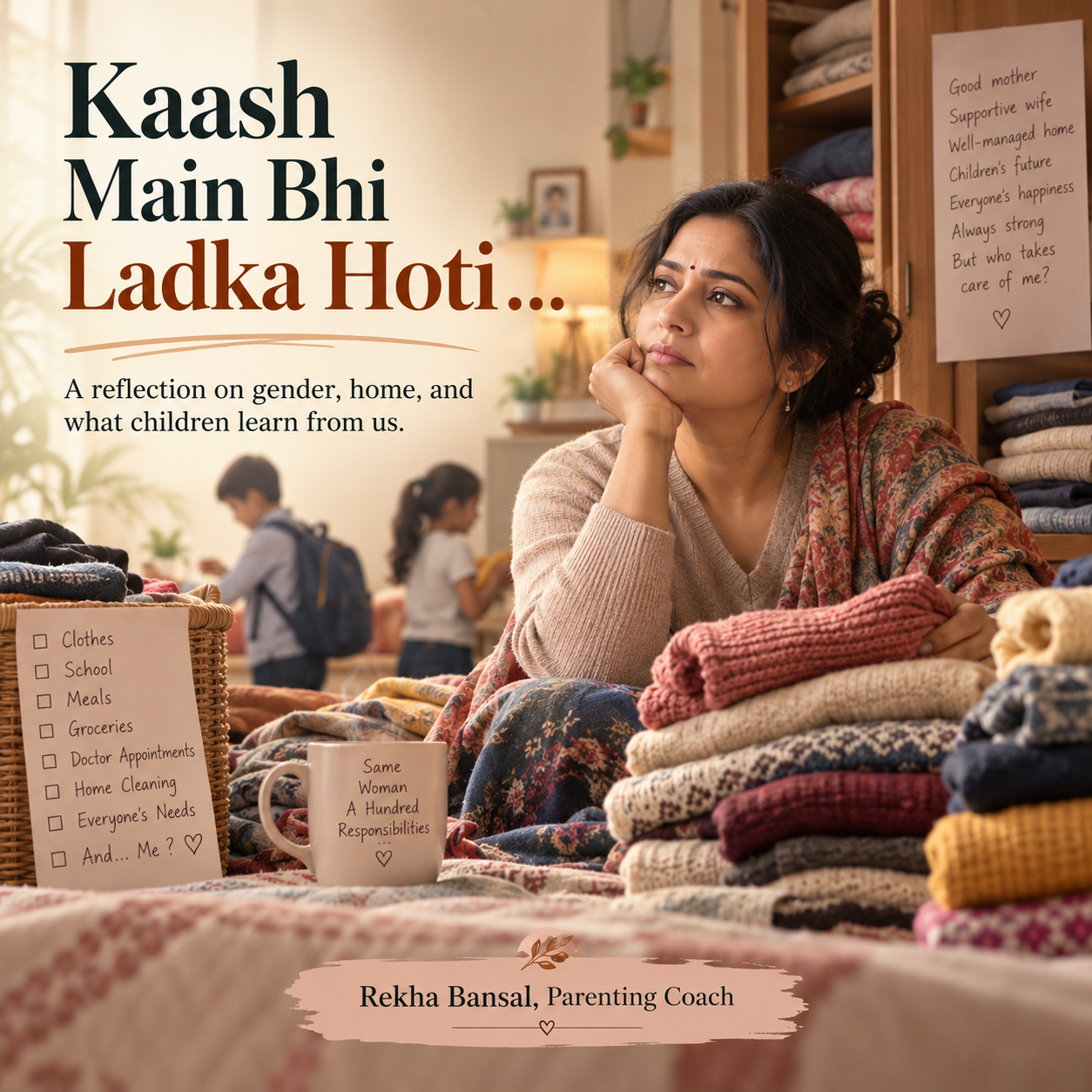
A few days ago, I was rearranging my cupboards, taking out winter clothes and packing away the summer ones.
And suddenly, a familiar thought crossed my mind.
“Kaash main bhi ladka hoti…”
I smiled to myself.
Because this wasn’t the first time.
Almost every winter, while sorting clothes, arranging cupboards and managing the seasonal changes at home, this thought quietly visits me.
And not just during winters.
Sometimes, when I have to step out for a few hours and find myself mentally preparing an entire checklist.
Ghar mein sab manage ho jayega? Khaane ka kya hoga? Kya-kya pehle se arrange karna hai?
Sometimes, when I am managing my professional responsibilities alongside the countless little things that keep a home running.
And sometimes, during those painful days of menstruation, when life continues as usual, even though my body is asking for rest.
At such moments, I have wondered:
“Would life have been a little easier if I were a boy?”
Not because I don’t enjoy being a woman.
I love being a woman, a mother, an educator and everything else that I am.
But sometimes, I question the expectations that come with being one.
And then another thought strikes me.
Have boys ever thought, “Kaash main bhi ladki hota”?
Perhaps some have. But why does this wish seem so unfamiliar to us?
Is it because, somewhere, we have made being a boy appear more comfortable, more powerful and more privileged?
What Are We Really Teaching Our Boys?
I once came across a thought that stayed with me:
“Men are not taught how to be men. They are taught how NOT to be women.”
Think about the sentences we casually use.
“Ladkiyon ki tarah kyun ro raha hai?”
“Mard ban, strong ban!”
“Yeh ladkiyon wale kaam hain.”
“Boys don’t cry.”
What are we really communicating?
That crying is feminine.
That expressing emotions is weakness.
That household responsibilities belong to women.
And that being a man somehow means being different from, or superior to, a woman.
We may not intend to teach these beliefs, but children are continuously learning from our words, actions and everyday behaviour.
A little boy watches his mother prepare meals even when she is exhausted.
He watches his father relax while she continues working.
He notices who serves food, who clears the table, who remembers everyone’s needs, and whose needs come last.
And without anyone formally teaching him, he begins to understand what a woman’s role is supposed to be.
Similarly, a little girl watches the same things.
And perhaps, years later, while rearranging her cupboard, she too whispers:
“Kaash main bhi ladka hoti…”
Change Doesn’t Begin in Society. It Begins at Home.
As an educator and parenting coach, I strongly believe that parents are a child’s first teachers, and home is the first classroom.
We talk so much about gender equality.
We encourage our daughters to study, become financially independent and achieve their dreams.
And rightly so.
But are we preparing our sons to share the responsibilities of everyday life?
Are we teaching them that cooking, cleaning, caring and managing a home are basic life skills, not gender roles?
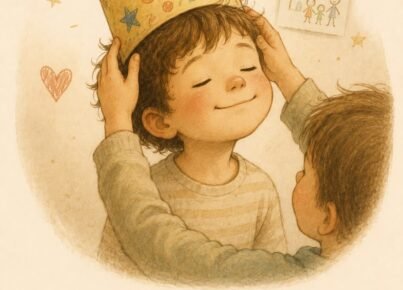
Are we allowing our sons to cry without questioning their masculinity?
Are we teaching our daughters to speak up without calling them disrespectful?
And most importantly, are we modelling the equality we want our children to practise?
Because children learn far more from what they see than from what we preach.
A Small Reflection for Every Parent
Next time your son cries, don’t say, “Ladkiyon ki tarah mat ro.”
Simply ask, “Kya hua beta?”
Next time household work needs attention, involve your son and daughter equally.
Let them both learn responsibility, empathy, independence and respect.
And let our sons see that caring for a family is not only a woman’s responsibility.
We don’t need to raise girls who can do everything and boys who are excused from everyday responsibilities.
We need to raise human beings who can share both opportunities and responsibilities.
Maybe then, one winter, a woman rearranging her cupboard won’t find herself thinking:
“Kaash main bhi ladka hoti…”
Not because she has fewer responsibilities.
But because she no longer has to carry them alone.
Before we ask whether our children believe in equality, perhaps we need to ask ourselves:
“Kya hamare ghar mein equality sirf sikhayi jaati hai, ya jee bhi jaati hai?”
Rekha Bansal
Parenting Coach | Child & Adolescent Counsellor | Educator
Founder, Focus Education